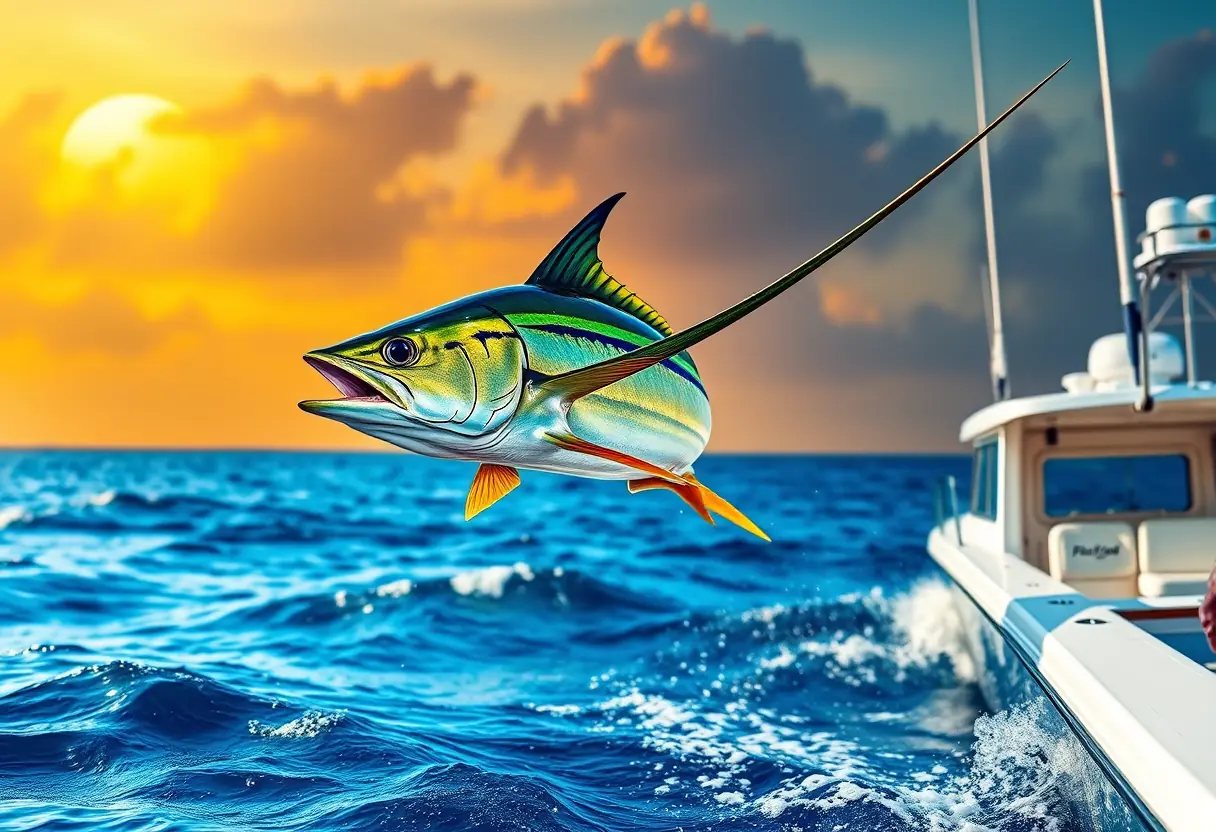
Find the weed line, find the mahi. This is the fish that rewards paying attention to floating structure. A single patch of sargassum can hold a school stacked from bull-sized fish on top to peanut-sized schoolies below. Run the edge, mark every piece of debris, and keep a pitch bait ready for the fish that follows the spread without committing.
Mahi respond aggressively to surface presentations: kite-fished baits and skipping lures both draw explosive, visible strikes. Once one fish is hooked, keep it in the water near the boat; mahi school tight and a hooked fish often pulls the rest of the school right up to the transom.
Where and When
Weed lines, floating debris, and current edges hold mahi consistently through warm months, with many warm-water fisheries producing fish outside that peak. Structure of any kind—a pallet, a buoy, a patch of grass—is worth a pass; mahi congregate under almost anything floating. Work the side of the object with the cleanest current, watch for frigate birds and flying fish, and stay mobile when the first mark does not turn into a bite.
Tackle Class
Twenty- to 30-pound spinning or conventional gear handles the vast majority of mahi encountered offshore. Step up for bull-sized fish mixed into a school of schoolies. The kite-fishing guide gives the surface presentation its best chance, and a saltwater braid setup keeps enough line on the reel for a fast first run. Keep the net or gaff plan clear before the school reaches the transom.
Size, fight, and the OffshoreHookup canon
Schoolies can weigh only a few pounds, while bull mahi commonly reach 15-30 pounds. A 40-pound-plus bull is a trophy, and exceptional mahi push beyond that class. Mahi belong in the OffshoreHookup canon because they make offshore awareness pay instantly. A floating weed line becomes a glowing, violent surface bite; one fish becomes five; and a crew that watches the water gets rewarded before the crew staring only at the GPS knows what happened.
The hookup plan
Keep one rod ready for the follower while another angler works the hooked fish. A hooked mahi near the transom can hold the school in position long enough for a second cast, but never let the school rush the propeller or turn a controlled bite into a cockpit scramble. Dispatch or release each fish cleanly, then make the next pass before the current carries the weed line out of range.