OffshoreHookup
Blue marlin clearing the water in a full greyhound jump, deep blue ocean behind it

Orange Beach, ALOffshore Fishing

The nation's biggest reef program, with blue water past it

The run

about 8-15 miles offshore
Orange Beach artificial reef zone

Part of an Alabama reef program covering more than 1,100 square miles of Gulf bottom.

Source ↗
about 30 miles southeast of Perdido Pass
The Nipple, the Elbow and the 131 Hole

Small-boat billfish water when the blue pushes in close.

Source ↗
in as close as about 35 miles in warm months
Yellowfin grounds

Tuna push closer once the water heats up.

Source ↗
60 to 100-plus miles
Blue marlin water

The big blues usually mean a long run.

Source ↗

Bite calendar

Month-by-month targets out of Orange Beach. Water temperature and bait move these windows every year: treat it as the starting chart, not a guarantee.

Orange Beach offshore bite calendar by month
SpeciesJanFebMarAprMayJunJulAugSepOctNovDec
Blue MarlinPeak Jun–SepOffOffFishableFishableFishablePeakPeakPeakPeakFishableFishableOff
Yellowfin TunaPeak Jun–AugOffOffOffFishableFishablePeakPeakPeakFishableFishableOffOff
WahooPeak May–JulOffOffFishableFishablePeakPeakPeakFishableFishableFishableOffOff
MahiPeak May–AugOffOffOffOffPeakPeakPeakPeakFishableFishableOffOff
RedfishPeak Apr–Jun, Sep–OctFishableFishableFishablePeakPeakPeakFishableFishablePeakPeakFishableFishable
TarponPeak Jun–AugOffOffFishableFishableFishablePeakPeakPeakFishableOffOffOff

Orange Beach does two things better than almost anywhere on the Gulf. It sits on top of the largest artificial reef program in the country, and when the blue water pushes north, billfish come within reach of a center console. Perdido Pass is the launch point for both.

The Run

Start close. Outdoor Alabama reports its reef program now covers more than 1,100 square miles of Gulf bottom, with a reef zone off Orange Beach roughly 8 to 15 miles out. That is reef fish country, and wahoo can slide in shockingly close during summer.

Push farther. The Gulf Shores and Orange Beach tourism desk points small boats to the Nipple, the Elbow and the 131 Hole, with billfish water about 30 miles southeast of Perdido Pass when the blue comes in close.

Yellowfin can show as close as about 35 miles in the warm months. For the big blues, plan on serious range: Salt Water Sportsman puts those runs at 60 to more than 100 miles.

What Bites, When

Blue marlin run March through November off Alabama, per Salt Water Sportsman. The heart of it is June through September, when the tournament calendar stacks up.

Yellowfin come into range April through October and peak June through August.

Wahoo run March through October. Late spring into early summer, May through July, is the hottest stretch.

Mahi show May through October and peak through the summer.

Redfish are a year-round fishery. Spring and early fall are the peaks, and bull reds work the beaches from fall into mid-February.

Tarpon start arriving in March, build through spring, hit the beaches in June and slide into the bays later in the summer.

Auburn’s Alabama Water Watch says tarpon arrive off Alabama as early as mid-March, peak in July and recede by October. March through May and September are marked as fishable shoulders; the June-August peak stays on the local beach-run timing.

How to Fish It

When blue water touches the Nipple and Elbow, pull a marlin spread and cover ground. The blue marlin trolling spread lays out lure positions and how to run them. Between bites, crank up the speed and cover ground for wahoo with a high-speed wahoo spread.

Weed lines and floating debris on the way out are mahi magnets. Slow down and work them.

Blown out of the blue? Bull reds on the beaches from fall into February are no consolation prize. Run the bull redfish live-bait program and get your hands on a real redfish.

Pack for This Port

A blue-water day from Perdido Pass needs a two-speed trolling reel with drag to spare, heavy braid backing, wire for wahoo, and electronics that read temperature breaks and bottom. A fixed gaff does the work at the boat.

Build from the blue-water trolling starter kit and the wahoo wire-ready kit. Dial in the details with the wire leader roundup, the offshore electronics guide, and gaffs and boatside tools.

Before You Go

Alabama sets its own size and creel limits, and federal Gulf reef fish seasons change year to year. Check both before you drop on a reef. Tunas, billfish, swordfish and sharks fall under federal Atlantic HMS rules, so look into the HMS Angling permit before you pull a marlin spread. Runs of 60 to 100-plus miles demand a fuel plan with reserve and a forecast you actually trust. This is not legal advice. Go to the agency pages linked here.
Kits built for this run


Gear for Orange Beach

Heads up: OffshoreHookup.com is an Amazon Associate. Every product link on this page routes through /go/ to Amazon, tagged with our affiliate ID. If you buy through it, we earn a commission at no extra cost to you. Recommendations aren't for sale.Read the full disclosure →

Tiagra Two-Speed Conventional Reel
Shimano$840

Tiagra Two-Speed Conventional Reel

4.8(16)on Amazon

Mid-size Tiagra for yellowfin, wahoo and mahi spreads. Two speeds to winch in or to turn a fish that wants to run.

HOLDS UP
  • Two-speed gearing
  • Smooth, stout drag
  • Fits a full trolling spread
WATCH FOR
  • Heavy for all-day stand-up work
Power Pro Spectra Braid, 80lb/500yd
Power Pro$63

Power Pro Spectra Braid, 80lb/500yd

4.7(5,838)on Amazon

Zero-stretch braid that lets a chunking angler feel the take from 200 feet down. Round, smooth, and it lays on the spool without digging in under drag.

HOLDS UP
  • Thin diameter for line capacity
  • No stretch, feel every hit
  • Round profile, low wind-knot rate
WATCH FOR
  • Needs a mono or fluoro top-shot for stretch and abrasion
Surflon Micro Supreme 7x7 Wire Leader, 5m / 40lb Camo
AFW$18

Surflon Micro Supreme 7x7 Wire Leader, 5m / 40lb Camo

4.7(112)on Amazon

Nylon-coated 7x7 wire that stays flexible enough to tie normal knots instead of crimping every rig. The everyday toothy-fish leader for mackerel, small wahoo, and bluefish that would shred fluoro on the strike.

HOLDS UP
  • Flexible enough for standard knots, no crimping tools required
  • Nylon coating resists kinking
  • Camo finish, low visibility
WATCH FOR
  • Not rated for the biggest wahoo and kingfish; step up to single-strand for those
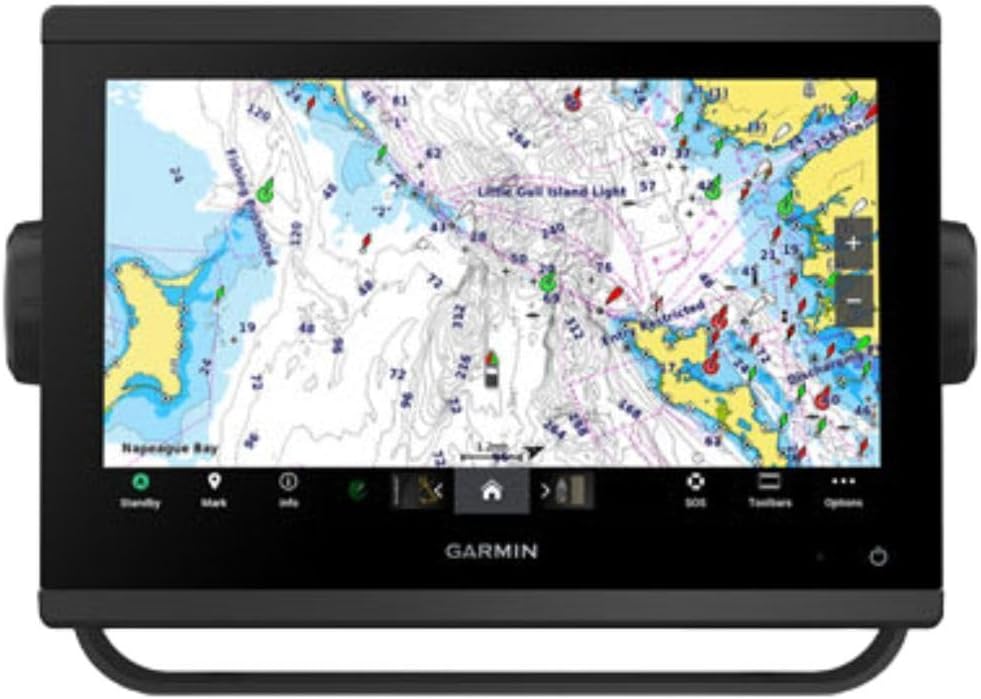
GPSMAP 943xsv Chartplotter/Sonar Combo
Garmin$1,600

GPSMAP 943xsv Chartplotter/Sonar Combo

4.8(39)on Amazon

Finds the temp break and the bait ball before you burn another gallon of diesel running blind. CHIRP + ClearVü sonar reads structure and fish arches 40 miles out same as it does inshore.

HOLDS UP
  • CHIRP + ClearVü sonar picks out bait balls and structure
  • 9" chartplotter covers offshore + inshore in one unit
  • Networks with autopilot and radar
WATCH FOR
  • Serious investment: budget for the full setup, not just the head unit
Fixed Gaff, 7ft, Carbon Fiber Shaft
BUBBA$341

Fixed Gaff, 7ft, Carbon Fiber Shaft

4.4(57)on Amazon

The everyday gaff for mahi, wahoo, and school-size tuna. Sharp, stainless, and long enough to keep you off the gunwale on genuinely large fish.

HOLDS UP
  • Simple, reliable, no moving parts
  • Stainless offset hook holds an edge
  • 7ft reach keeps the crew clear
WATCH FOR
  • Premium price for a fixed gaff; the telescopic pick covers smaller boats for less

Orange Beach offshore FAQ

How far offshore do you have to go for blue marlin from Orange Beach?

Salt Water Sportsman puts typical big-blue runs at 60 to more than 100 miles. When blue water pushes in, billfish show around the Nipple, Elbow and 131 Hole, about 30 miles southeast of Perdido Pass.

What is the best month to fish offshore in Orange Beach?

Summer. June through August stacks blue marlin, yellowfin and mahi in the same window, and May is a monster month for wahoo and mahi.

What can you catch offshore from Orange Beach, Alabama?

Blue marlin, yellowfin and blackfin tuna, wahoo and mahi offshore; red snapper, amberjack and other reef fish on the artificial reefs; and redfish closer in. Tarpon arrive as early as March and peak June through August.


Sources

Last checked 2026-11-03.


More Gulf Coast ports