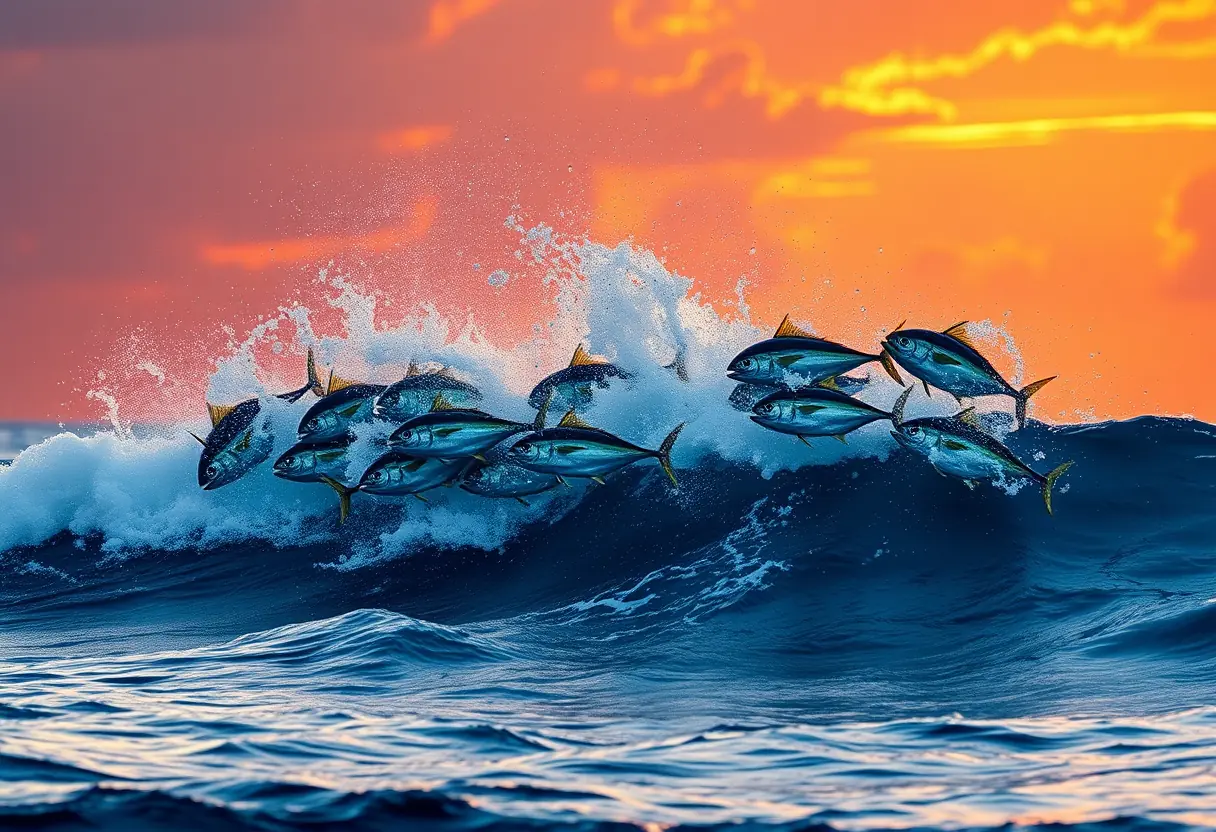
Yellowfin are the bluewater workhorse: fast, hard-running, brutally alert, and perfectly willing to turn a quiet canyon edge into a full-crew emergency. They reward patience and punish sloppy leader work in equal measure. A well-built chunk slick can turn empty water into hours of steady action, but a school gets leader-shy fast after repeated pressure. Build clean, retie often, and treat every mark on the sonar as a reason to stay ready.
Where and When
Canyon edges, temperature breaks, current seams, and bait stacks hold yellowfin consistently through the warm months. In tropical and subtropical water, the fish can be available through every season; in temperate fisheries, the strongest windows follow migrating bait and the warm-water push. They travel in schools, often mixed with mahi and occasionally blackfin, so a slow day can turn into a multi-species blitz without warning. Work the edge with sonar, watch for birds and flyers, and do not leave productive water because the first pass was quiet.
Tackle Class
Thirty- to 50-pound class covers most yellowfin encountered chunking or trolling. Spinning tackle shines when fish are visible or finicky; conventional gear gives a chunk bait control and reserves line for a long first run. Go lighter for finesse presentations in clear water and heavier when the sonar shows larger marks. The bump-and-wind rig is a serious option when a bigger fish takes the bait and the fight needs disciplined pressure.
Size, fight, and the OffshoreHookup canon
School fish are commonly 20-40 pounds, while a 50-80-pound yellowfin changes the pace immediately. Fish over 100 pounds are legitimate trophies, and the all-tackle record class climbs dramatically beyond that. A yellowfin belongs in the OffshoreHookup canon because it makes every weak link visible: the wrong hook, a nicked leader, a lazy drag check, or a poor gaff position all get exposed at speed. This is the species that turns a rig into a crew drill. When the slick is right and the school comes up, there is no room for spectators.
The hookup plan
Keep the chunk baits natural and let the current do the work. When the line comes tight, clear the cockpit before increasing pressure, then follow the fish with the boat instead of asking the angler to win a long-distance tug-of-war. A clean leader, a measured drag increase, and a ready gaff or release plan turn a yellowfin bite into a repeatable system instead of one lucky fish.