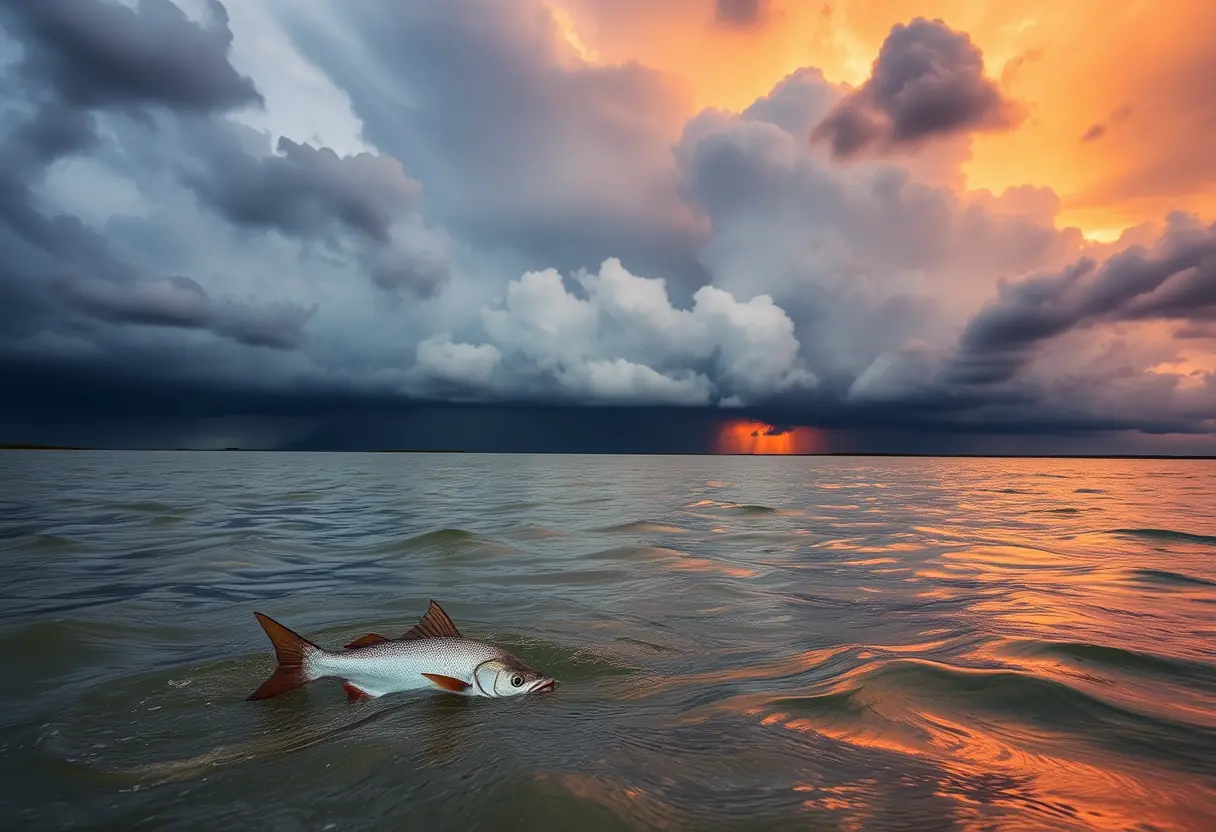
Most anglers pack it in when the wind picks up past 15 knots. That’s the mistake. A blow doesn’t shut down the bull redfish bite. It relocates it, off the flats and onto structure, where the fish are actually easier to find if you know where to look.
Start with an inlet and structure, then let the wind show where the bait piles up. Venice’s redfish water near the Mississippi mouth and the Charleston marsh and offshore departure put this rig in two distinct coastal systems.
Finding Them
Wind-driven chop kills sight-fishing and pushes baitfish off exposed flats. Bull reds follow the food, which means channel edges, bridge pilings, jetty rocks, and any current break that’s still delivering bait despite the surface mess. Deeper water near structure also means calmer conditions below the chop, and the fish are more comfortable there than you’d expect looking at the surface.
The Rig
Simple beats complicated in dirty water. A fish-finder rig (sliding sinker above a swivel, 18-24 inches of 30-40lb fluorocarbon leader to a 5/0-7/0 circle hook), fished on the bottom with a live mullet allowed to swim along the seam. Hook the bait through the lips or behind the dorsal fin, clear of the spine. Fresh cut mullet is the fallback when a live bait cannot hold that line. Braid main line in 20-30lb test gives you the sensitivity to feel a bite through current and chop that would mask it on mono.
Weight enough to hold bottom in the current, usually 2-4oz depending on the break, but no more. Over-weighting kills the natural presentation and makes it harder to feel the take. Texas Parks and Wildlife recommends larger live mullet and fresh cut mullet for bull reds and a slip-sinker rig for live fish.
Working the Structure
Cast up-current of the structure and let the rig settle and hold. Bull reds ambush from current breaks: the slack water behind a piling or rock, not the fast water beside it. Give a spot 20-30 minutes before moving; reds will find a well-placed bait even in stained water, it just takes longer than sight-fishing a clean flat.
Set the drag firm. Bull redfish near structure will use pilings and rocks to cut you off if you give them slack to work with. This isn’t a finesse fight; it’s about keeping the fish’s head turned away from the structure from the first pull.
What Kills This Rig
Fishing too far from the actual break. A cast that lands in open current instead of the seam misses the fish entirely; precision matters more than distance here.
Light drag near structure. A bull red given slack near a piling will use it every time.
Giving up too early on a stained-water spot. Structure fishing in dirty water is slower than sight-fishing clean flats; commit to 30 minutes per spot before moving.
No small version of a bull red on 30lb braid near a bridge piling: this is a full-drag fight from the first pull.