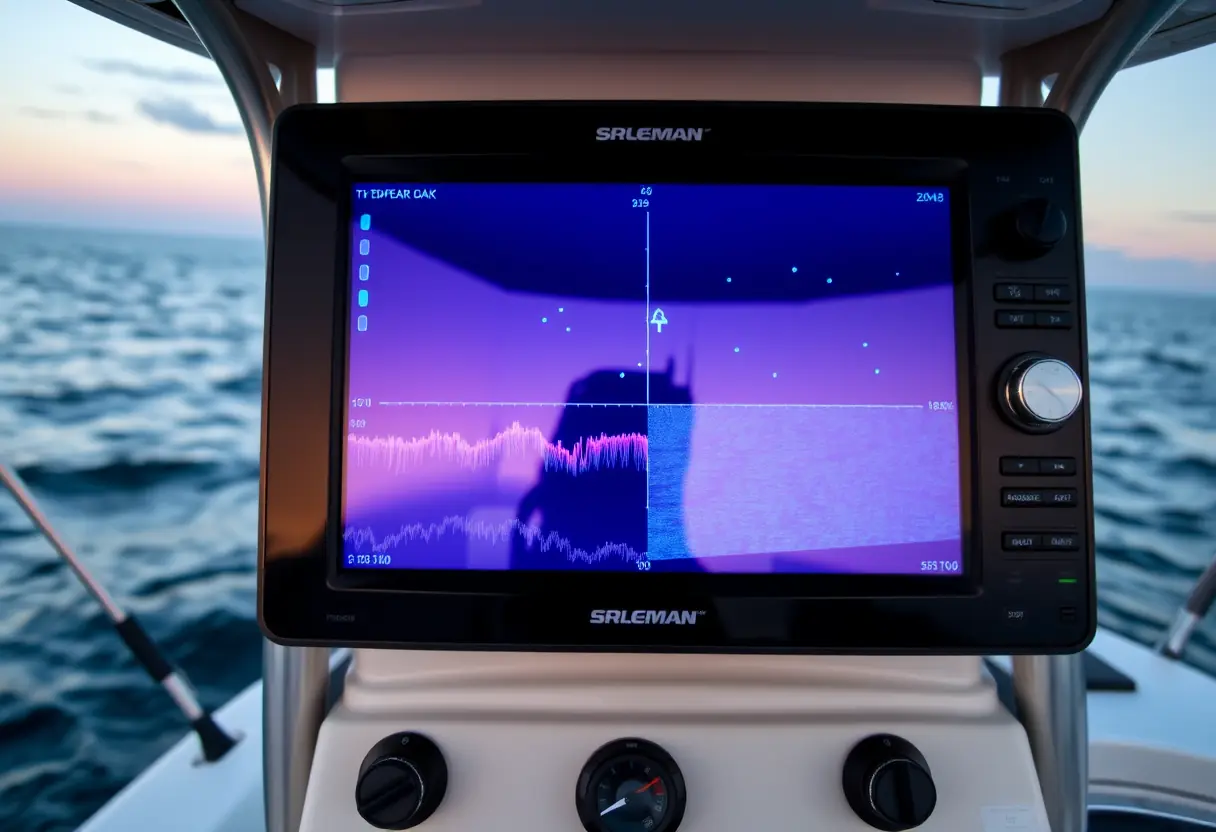
Forty miles offshore, electronics do the finding so you can spend your fuel and your time actually
fishing instead of searching blind. A half-degree temperature break is often the entire difference
between an empty spread and a triple hookup, and you won’t see that break without the right gear
on board.
What We’re Looking For
CHIRP sonar. Reads bait balls, structure, and fish arches with more resolution than older
broadband sonar: the difference between “something’s down there” and “that’s a school of
yellowfin at 180 feet.”
Networked systems. A chartplotter that talks to your autopilot and radar saves real time on a
long run out and lets one person run the boat while the rest of the crew rigs.
Real-time temperature data. A dedicated sea-surface-temperature sensor finds the break faster
than reading water color alone, especially before first light.
As an Amazon Associate we earn from qualifying purchases through the links on this page. Full
affiliate disclosure.
Our Picks
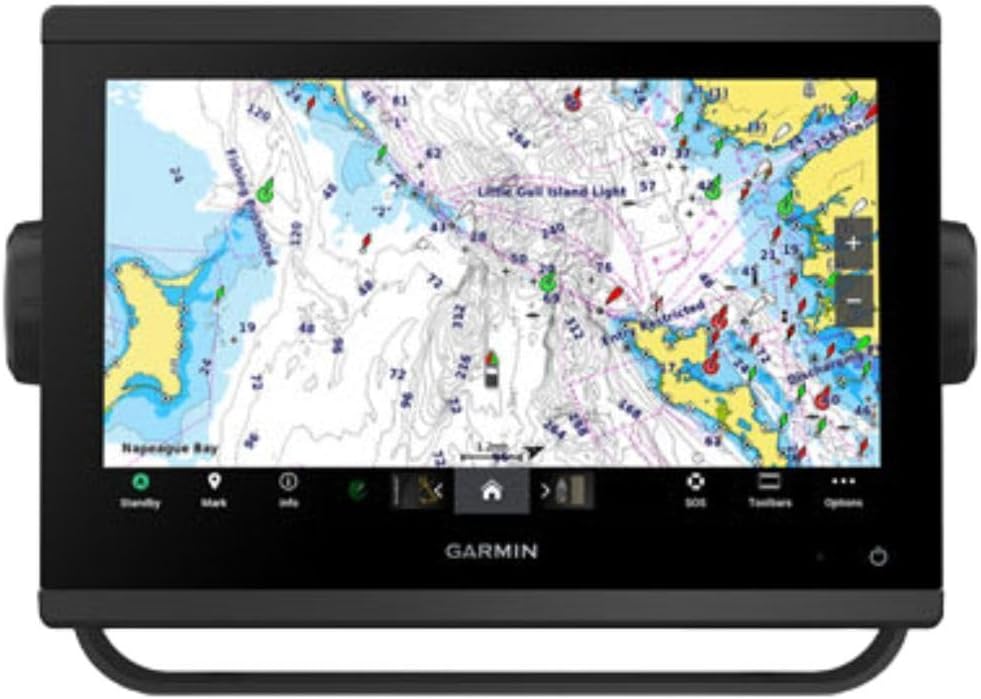
A Garmin GPSMAP chartplotter/sonar combo is the backbone of a serious
offshore electronics package: chartplotting and CHIRP sonar in one networked system. Add a
dedicated SST sensor if your combo doesn’t already track it well; finding the
temp break is worth the extra line item.
This is a real investment, not an impulse buy. Budget for the full setup, not just the head unit;
transducer quality matters as much as the display.
Frequently Asked Questions
What electronics setup finds offshore tuna structure?
Build around a networked chartplotter and CHIRP sonar, then add a sea-surface-temperature sensor. The transducer, display, and network must be installed as one system so bait, depth, and temperature breaks line up.
Which species and techniques suit offshore fishfinders?
These electronics target bluefin and yellowfin by locating bait and temperature edges, while also helping crews position wahoo, sailfish, and mahi spreads. They turn a long offshore search into a repeatable run-and-check pattern.
How do I maintain offshore electronics?
Flush and dry connectors, protect the display from salt spray, inspect the transducer face, and keep firmware and charts current. A clean transducer reads bait and structure; a fouled one sends the boat searching blind.
Is premium networking worth it over a budget fishfinder?
A budget sounder covers basic depth and bait work close to shore. Premium CHIRP, networking, and temperature data earn their cost on long bluewater runs where fuel, time, and a half-degree break decide the trip.
Garmin$1,600
GPSMAP 943xsv Chartplotter/Sonar Combo
★ 4.8(39)on Amazon
Finds the temp break and the bait ball before you burn another gallon of diesel running blind. CHIRP + ClearVü sonar reads structure and fish arches 40 miles out same as it does inshore.
HOLDS UP
- CHIRP + ClearVü sonar picks out bait balls and structure
- 9" chartplotter covers offshore + inshore in one unit
- Networks with autopilot and radar
WATCH FOR
- Serious investment: budget for the full setup, not just the head unit
Paid link · We may earn a commission from purchases.
Raymarine$249
DST800 Depth/Speed/Temp Transducer
★ 3.9(8)on Amazon
Half a degree of temp break is the difference between an empty spread and a triple hookup on yellowfin. This thru-hull transducer feeds that data straight to a networked chartplotter.
HOLDS UP
- Real-time temp break tracking
- Feeds depth + boat speed to the same display
WATCH FOR
- Thru-hull install: budget a haul-out or a marine tech, not a DIY afternoon
Paid link · We may earn a commission from purchases.