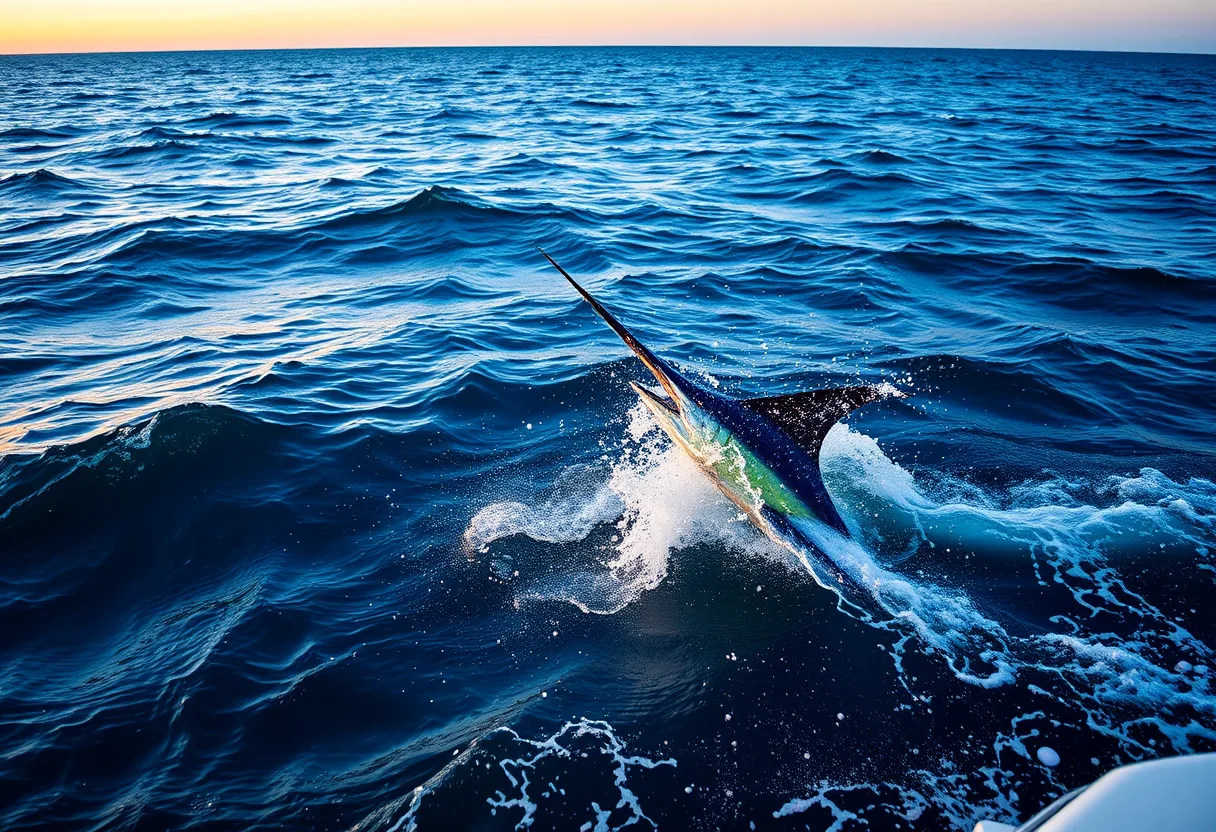
A blue marlin materializes in the spread and disappears in seconds. Either the right lure is in the right position at the right speed, or the fish passes through and you never get another shot.
The spread is not decoration. It is a system: spread geometry calibrated for which position fires the bite, teaser placement that excites fish that won’t commit cold, and a practiced pitch-bait sequence that converts a raised fish into a hooked one. Get any one piece wrong and you are watching tail fins vanish in your wake.
Spread Geometry
Five to seven rod positions: two outriggers set wide (40-60 feet back), two flat lines (20-30 feet), a short rigger in the center of the prop wash (15-20 feet), and a shotgun line straight back at 80-100 feet or more when the boat has rod holders for it.
The goal is to cover the entire cone of disturbed water behind the boat. A blue marlin tracking from 100 yards back can intersect any position in the spread. Cover the full width and full depth of the wake and every fish in range sees something.
Long rigger positions run the heaviest skirted lures (10-14 inch range). Flat lines run rigged pitch baits, typically a dead ballyhoo or small mackerel. The short rigger runs a smaller lure that mimics a baitfish separated from the school. The shotgun sits in the middle of the spread’s pressure zone, far back and ready for a fish that blew the close-in positions without committing.
Trolling Speed
Seven to eleven knots. Most crews settle on 8-9 as the baseline where skirted lures track cleanly without blowing out or going dead on the surface. Rough seas push you to the low end; a flat-calm bluewater day lets you push toward 10 without the spread falling apart.
Speed affects lure action more than any other variable. Too slow and the skirts drag; too fast and the heads blow out of the water and lose the swimming motion that draws strikes. Watch the long riggers: they should swim in the second or third wave behind the boat, not skip the surface or submerge. When the spread looks right, note the RPM and hold it.
Teasers
A hookless teaser is what turns a passive follower into a committed fish. Daisy chains, bird-and-squid rigs, or a large rubber squid in the short position create the illusion of a bait ball running from the prop wash. Marlin that won’t eat a lure on their own will chase a teaser straight to the transom.
The sequence: fish shows behind the spread and starts tracking a teaser. The mate on the teaser line pulls it toward the boat at a steady pace to fire the fish up. The moment the marlin is lit and close, the teaser comes out of the water and the pitch bait goes in its place. The fish is already at full speed chasing something that just disappeared; the pitch bait drops into that exact space.
Running the teaser in the shotgun position and a live pitch bait on the short flat line is the standard setup. If the boat is running a kite spread for other species, kite clips and release hardware can extend teaser and bait positioning away from the immediate prop wash and into cleaner water.
The Rig
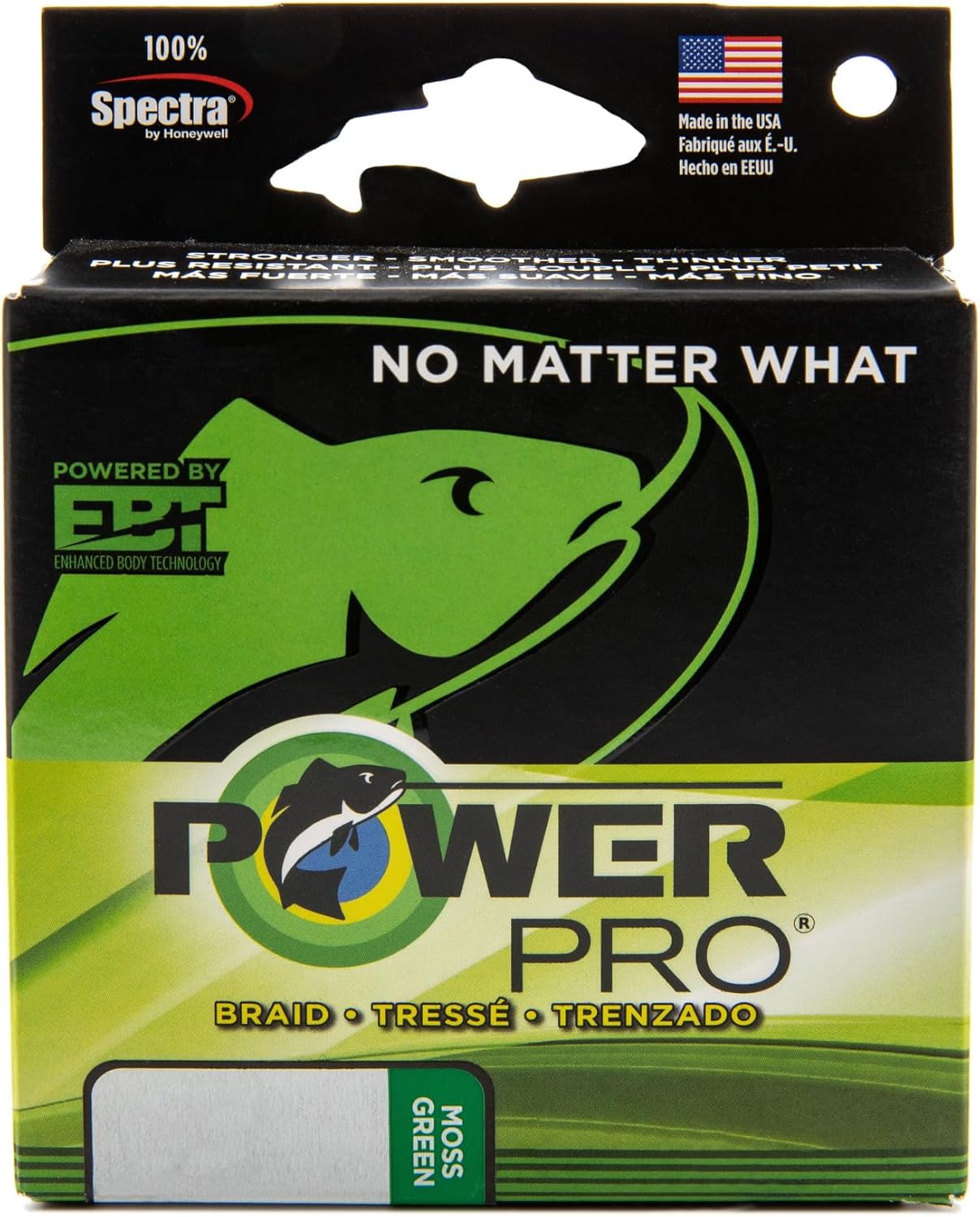
Power Pro 80lb braid on a Penn International VI 80 or Shimano Tiagra 50A is the standard build for a blue marlin flat line or long rigger. Braid gives zero-stretch feedback and holds more capacity than comparable mono at the same reel size, which matters when a fish takes 300 yards in the first three minutes.
Wind-on leader: 15-20 feet of 300-500lb monofilament. This is not overkill. The leader takes the rub of a marlin circling the boat, the bill wrapping, and the abrasion from the leader hand’s grip. Build it to protect the main line, not to match the bite.
Hook it to a 50-80lb standup trolling rod with roller guides. Roller guides cut friction under load and survive the specific abuse of a marlin fight without guide rings burning through on a long run. Pair the rod with a fighting harness before the fish is ever in the water. There is no small version of this fight, and transferring the load to your hips and legs instead of your arms is what keeps you in the fight past the twenty-minute mark.
The Bite-to-Hookup Sequence
The strike happens fast. What the crew does in the first thirty seconds determines whether the fish is hooked and running or gone.
Bite off a flat line: the angler feels the hit, applies steady pressure on the lever drag, and lets the fish load up before coming fully tight. Free-spooling on a blue marlin bite wastes time and lets the fish feel the weight of the hook before it is committed.
Pitch-bait scenario: the teaser mate calls the fish’s position and closes the teaser. The pitch-bait angler presents the bait behind the boat by hand or drops it back on the flat line at pace. The mate calls “eat” when the fish commits; the angler comes tight with steady pressure and drives the circle hook home without a violent hookset. Circle hooks in a trolling setup hook themselves on steady tension. A strike-set motion with a circle hook pulls the hook away from the corner of the jaw before it can seat.
Once it is on: clear the spread immediately. Every other line in the water is a tangle waiting to happen. Pull the teaser, wind in the outriggers, clear both flat lines. Marlin will run through lines they are not hooked on.
Boat Handling During the Fight
The boat is half the fight. The angler works the fish; the captain works the boat.
Backing down on a running marlin is the fastest way to recover line. When a fish greyhounds away at 35-40 mph, the captain backs down hard enough to maintain line pressure while the angler winds. Keeping tension through a series of jumps requires a coordinated boat move: bow into the jumps, chase the fish to kill the distance, and call every surge so the angler can respond.
Fight rules from the chair: pump and wind, keep the rod angle between 45 and 90 degrees, never drop the tip below the gunwale. Slack line on a marlin costs the hookup. At boatside, the fight is not over. A green blue marlin with 20 feet of line out has put deckhands in the water. Wire man calls the position, nobody crowds the leader until the fish is on its side and the circle hook is close enough to reach.
For a standup fight without a chair, the bump-and-wind rig guide covers harness mechanics and rod discipline that transfer directly to a blue marlin fight off the harness.
What Kills This Spread
Wrong speed, ignored. A spread tracking wrong at 8 knots does not fix itself. Check the long riggers every thirty minutes and adjust RPM until the lures are swimming cleanly in the second wave behind the boat.
Teaser left in on the bite. The teaser and the hooked fish occupy the same water. Pull the teaser the moment a fish commits to the pitch bait, not afterward.
Slack during the jumps. Bowing the rod on aerial jumps means controlled slack, not wild slack. Drop the tip toward the fish on each jump, wind back on the descent. Tension through a greyhound sequence is a skill that takes trips to build.
No plan at the leader. Every crew member has an assigned job at the wire: wire man, gaff or tag decision, camera if the fish is going back. A crew that hasn’t talked through the boat-side plan before the fish shows up improvises in real time on a green billfish at the transom, and that improvisation costs fish and sometimes crew.
For the full tackle-class breakdown and bite-window calendar, see the blue marlin species page. For SST chart work and canyon navigation before the spread goes in the water, the canyon run guide covers temperature break reading and run planning in detail. If you are running wahoo gear in the same spread at higher speeds, high-speed wahoo trolling spreads covers the lure selection and stagger that holds up at 14 knots without shredding.