The alarm goes off at 2am. The canyon edge is 75 miles out. You saw the break on the SST chart last night: a sharp gradient between 58 and 64 degrees right where the shelf drops away. The bluefin are stacked there. The only variable is fuel, time, and whether you did your homework.
This is how you run the canyons.
The Night Before: Chart Homework
Giant bluefin tuna live at the intersection of water masses. Cold, green shelf water on one side. Warm, blue pelagic water on the other. The break concentrates bait, and the bait concentrates the fish.
Pull satellite sea-surface temperature imagery before you leave the dock. Look for:
- A sharp temperature gradient. A 2-degree shift over a short horizontal distance beats a 5-degree gradual slope over 30 miles. Hard breaks hold bait longer because the water masses aren’t mixing as aggressively.
- Blue water intruding shoreward. A tongue of warm blue water pushing north on a chart often carries bluefin, yellowfin, and mahi inside the normal offshore range.
- The break aligned with canyon bathymetry. Canyon walls drop from 200 to 600+ feet over a short distance. Where the temperature break lines up with a canyon edge, the bait has nowhere to go but up.
Mark the waypoints. Build in fuel reserve. If the round trip plus four hours on the water burns more than 80% of your tank, you are making a bad bet at 75 miles offshore. Either adjust speed, target a closer break, or scrub the run.
The Run Out
Depart before first light. Bluefin feed hard at dawn and the surface bite slows once the sun angles in and the upper water column warms.
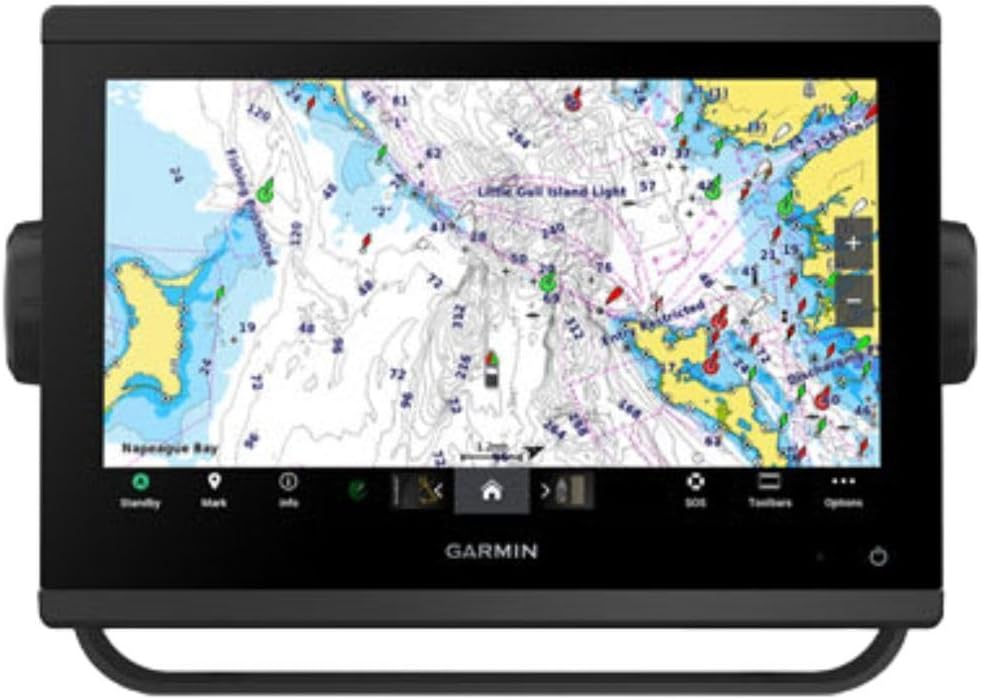
Run the Garmin GPSMAP from the moment you leave the dock. Watch your real-time surface temp on the DST800 transducer. When the number starts climbing two or three degrees in a short stretch, you are approaching a break. Slow down and look at the water color alongside. The color change from green to blue is visible from the helm before the electronics catch up.
Birds work the break from above. Diving gannets or shearwaters concentrated over a specific area mean bait near the surface, and bait near the surface means something is pushing it there from below. Mark that position and troll through it before you commit to a drift.
Setting the Trolling Spread
Trolling is not the most productive method for giant bluefin once you have confirmed fish in the area. But it covers water faster than anything else, and covering water is how you find the confirmation in the first place.
Run a four-line spread:
- Long rigger, 200 feet back. Cedar plug or a large skirted ballyhoo on 400lb fluoro leader. This is the locate bait: it is running through more water column and wake turbulence than anything else in the spread.
- Short rigger, 80 feet back. Another skirted lure, closer to the prop wash. Bluefin attacking from depth often hit the shallower, noisier presentation first.
- Flat line port, 60 feet back. A live mackerel or bluefish if you have them. A live bait in a trolled spread catches fish that ignore artificials on the same pass.
- Flat line starboard, 100 feet back. Large hoochie or spreader bar. The spreader bar mimics a bait ball and pulls reaction strikes from fish that are hunting visually, not chasing scent.
Troll at 7-9 knots. Giant bluefin can intercept any of these presentations. Slowing down because you think a slower spread looks more natural is a mistake: you look like a dead spread, not a better one.
Reading the Signs
You are looking for:
- Arching sonar returns in the 100-300 foot column. Large arches holding on the thermocline are confirmed fish presence. Drop the trolling spread and transition to chunk bait immediately.
- Surface bust. Giant bluefin pushing bait to the surface is impossible to miss: the water turns white, you can see the backs rolling through, and the noise carries. A full panic-stop, pitch chunks off the stern, get baits in the water. You have a narrow window.
- Weedlines with bait underneath. Sargassum weedlines in blue water often hold smaller tuna and mahi on the surface edges, with larger fish holding 30-60 feet below. Troll the edge of the weedline and put a bait underneath it before you write it off.
Transitioning to Chunk Bait
Once you have located fish, switch to chunking. The bump-and-wind rig guide covers the fight mechanics once a giant is hooked. This is the step before that.
Set a drift on the break. Cut butterfish, sardines, or mackerel into half-inch to one-inch chunks. Feed a steady slick off the stern: one small handful every 30-45 seconds, matched to your drift speed. A chunk pile landing in one spot teaches fish that the concentration is a trap. Spread it out downstream.
The hook bait: a full chunk on Power Pro braid backing to a 20-foot topshot of 130lb Seaguar fluorocarbon, terminating in a 9/0 or 10/0 circle hook. No swivel above the hook. No weight on the bait. It should drift free at the same speed and depth as the free chum around it.
If the chunks are getting picked off near the surface, the fish have moved up. Let your hook bait run unweighted and shallow. If chunks are making it well downcurrent without a take, drop the hook bait to 20 or 40 feet with a small split shot and see if the fish are holding deeper.
For the reel: the Penn International VI or Shimano Tiagra 50A on two-speed lever drag. A giant bluefin’s first run can strip 300 yards before you settle into the harness. Anything under-gunned does not survive that run. Strike drag at 30-35% of rated line strength. Lock the lever drag against the stop before the bait goes in. Drag creep under sustained load is how you lose a 250lb fish at the leader.
Put the fighting harness on before the first bait hits the water. You will not have time to rig it after.
See the chunking guide for more on building and reading the slick once fish are confirmed and feeding.
What Kills Canyon Runs
Stale SST charts. A chart from 48 hours ago is not useful for planning a canyon run. The break moves with wind, current, and seasonal flux. Pay for up-to-date satellite data or check a real-time source the evening before you leave. The difference between a productive run and an empty 150-mile diesel burn is almost always a chart.
Trolling too slow. A 5-knot spread looks dead to a fish built to run at 30. Giant bluefin are opportunistic but not stupid. Keep speed up until you are ready to make the chunk transition.
No harness on the angler. A giant hooked without a fighting harness rigged is a race between arm failure and the fish tiring. Your arms lose every time past the 20-minute mark.
Running without an EPIRB. The ACR GlobalFix V6 is not a comfort item at 75 miles offshore. It is the piece of gear that turns a mechanical failure into a rescue call instead of a missing vessel report. There is no small version of this requirement.
The canyon edge does not care about your timeline. The fish are there or they are not, and the chart tells you which. Do the homework before the alarm goes off, not on the ride out.