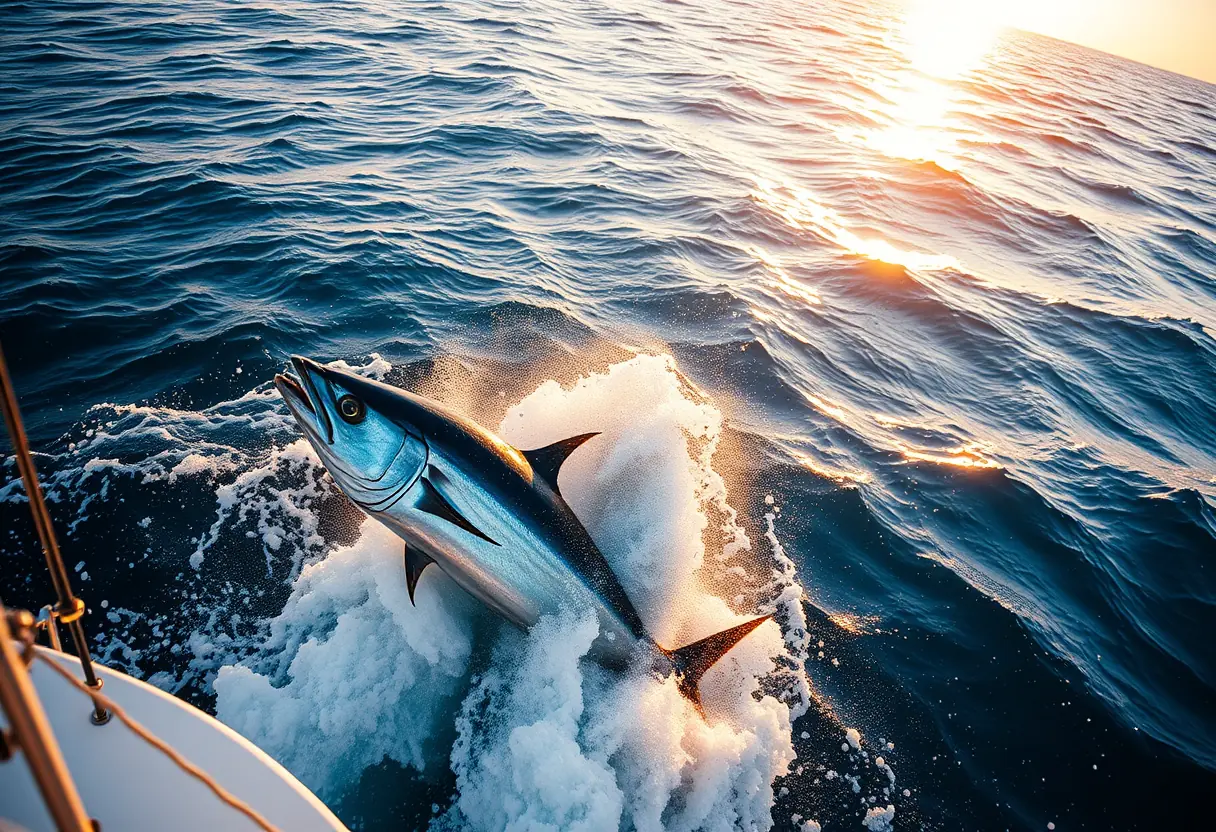
Giant bluefin do not fight fair. A green fish on the first run can strip three hundred yards before you have settled into the harness, and a full-grown giant can push a two-speed reel and a standup crew to their absolute limit for over an hour. The bite starts with finding the right water, but the landing depends on every detail after the hookup: drag settings, line angle, boat movement, and a crew that already knows the next command.
This isn’t a fish you outmuscle. It’s a fish you out-technique: the bump-and-wind rig exists because a fighting chair isn’t always an option and a giant bluefin doesn’t care either way.
Where and When
Bluefin runs are seasonal and migratory, chasing bait schools north through summer and holding on structure and temperature breaks as fall develops. In the North Atlantic, late spring through fall can deliver distinct inshore, offshore, and canyon opportunities; exact timing follows forage and water rather than a fixed calendar. Find the temperature break, find the bait, find the bluefin. Sonar and a sea-surface-temperature sensor do more work here than any lure choice. The canyon-run guide covers the water-reading decisions before the spread goes out.
Tackle Class
Eighty- to 130-pound standup gear is the working range for giant bluefin. Two-speed lever-drag reels are not optional at this weight class. The shift from fast retrieve to high torque is what closes out the fight once the fish tires. A bump-and-wind rig keeps the angler connected when a chair is not available, while the offshore reel guide helps match capacity and drag to the target class.
Size, fight, and the OffshoreHookup canon
Bluefin size varies sharply by stock and season, but a giant commonly weighs 300-600 pounds. Fish over 1,000 pounds are possible in the exceptional record class. Bluefin belong in the OffshoreHookup canon because they erase shortcuts. A knot that was “good enough” is not good enough, a tired crew cannot fake communication, and a reel without torque cannot manufacture leverage. This is heavy offshore fishing reduced to its hardest, longest form.
The hookup plan
Clear the cockpit, set the harness, and call line angle before the fish settles into a deep run. The boat should follow deliberately while the angler uses short pumps and the reel’s low gear to reclaim line. At color, the leader crew owns the next decision: keep the fish in the water for a safe release when regulations and the program call for it, or execute the documented landing plan without rushing the final turn.


