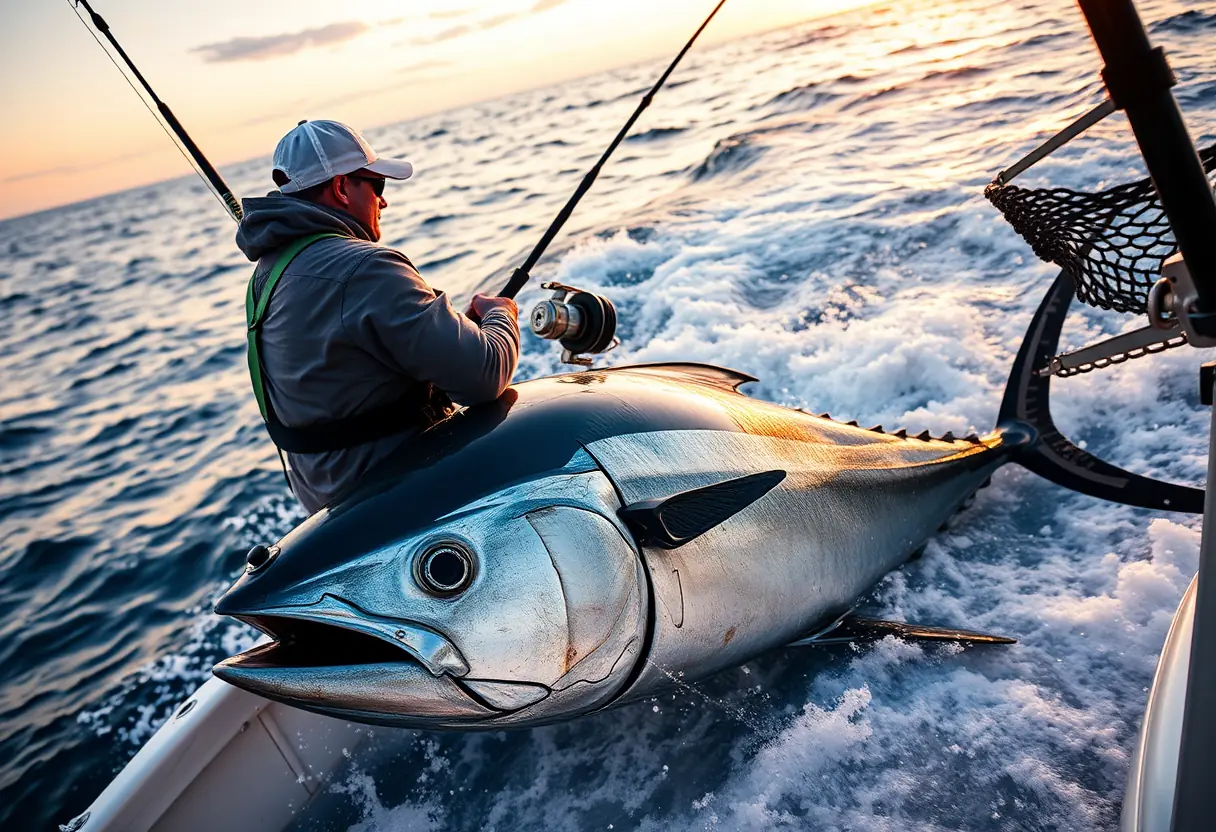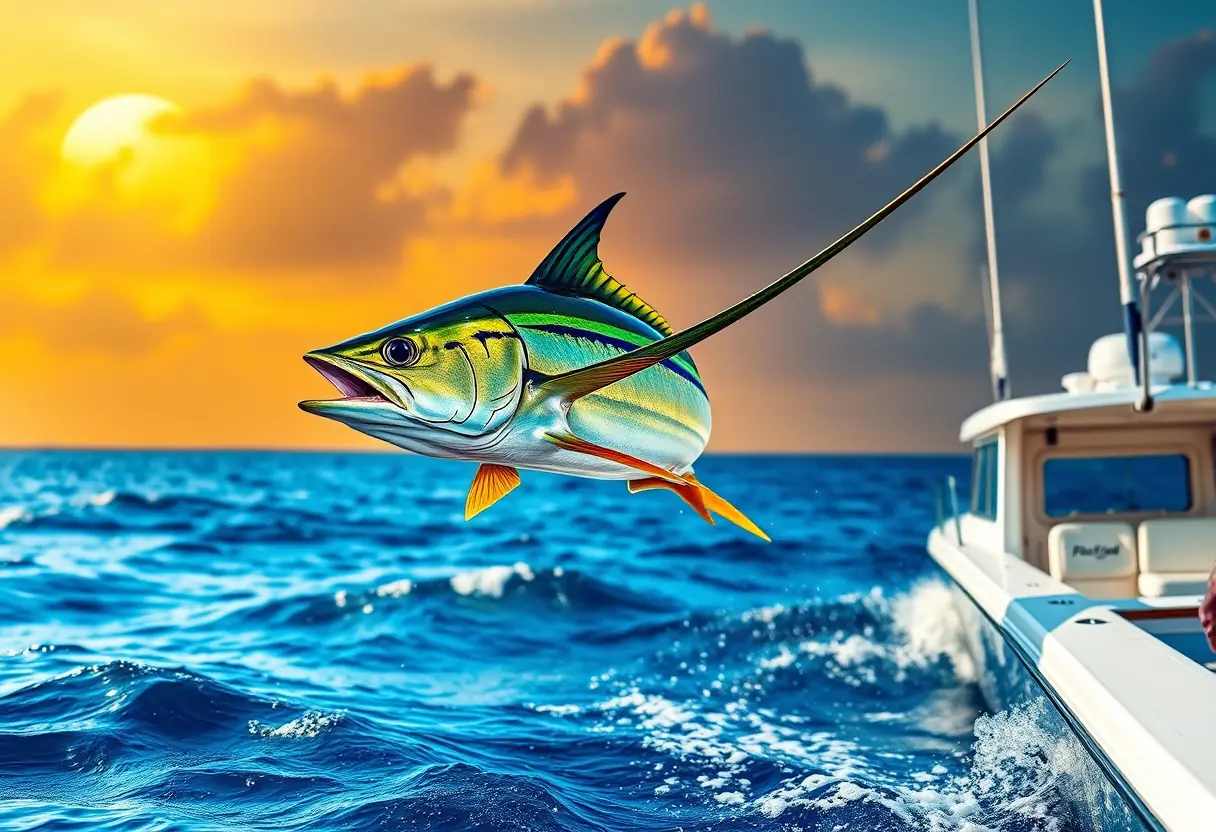
Port Canaveral launches rockets and it launches sportfishing boats. Off the Cape, the Gulf Stream sits far offshore, so the blue water takes commitment. Forty miles to the edge. A hundred-plus to the far side. The crews who make that run come back with the fish to prove it.
The Run
This is not Palm Beach. Down south the Stream hugs the beach. Off the Cape, you earn it.
The 20-mile weather buoy is the classic mid-range stop. Pull ballyhoo around it for mahi and wahoo when the edge is too far for the day.
The Gulf Stream edge sits roughly 35 to 40 miles out. Local reports find the edge around 350 feet, with clean blue water, rips and weedlines out to 850 feet. That’s where the bull mahi hide under the sargassum.
Then there’s the full send: the roughly 130-mile run to the weather buoy on the far side of the Gulf Stream, chasing yellowfin, mahi and kingfish. There’s no small version of that trip.
What Bites, When
Late November into winter brings the sailfish. The southbound migration reaches Port Canaveral in late November and December before pushing on toward Palm Beach and Martin counties. Some years the fleet finds a record pile of sails right off the Space Coast.
Spring is cobia and mahi season. Cobia show with the manta rays when the water hits the high 60s to low 70s. April and May are the peak dolphin months on Florida’s east coast, and the weedlines keep producing into summer.
Fall is the mullet run, starting in September and running well into November. Snook and tarpon gorge on the bait. Inshore, the Indian River Lagoon holds redfish all year.
The FWC Brevard County guide also lists winter and early spring for snook and tarpon, and winter through summer for mahi. The chart shows those as fishable shoulders around the more specific local peaks.
How to Fish It
Offshore, cover water. A high-speed spread finds wahoo when you’ve got miles to burn between the buoy and the edge: see high-speed wahoo trolling spreads. When you hit the weed, slow down, troll ballyhoo along it, and pitch baits once mahi show. Winter sailfish respond to live bait under kites: kite fishing for sailfish and mahi.
Weather won’t let you out? The lagoon behind the Cape is world-class redfish water. Pole the flats and throw to tailing fish with our redfish sight-casting guide.
Pack for This Port
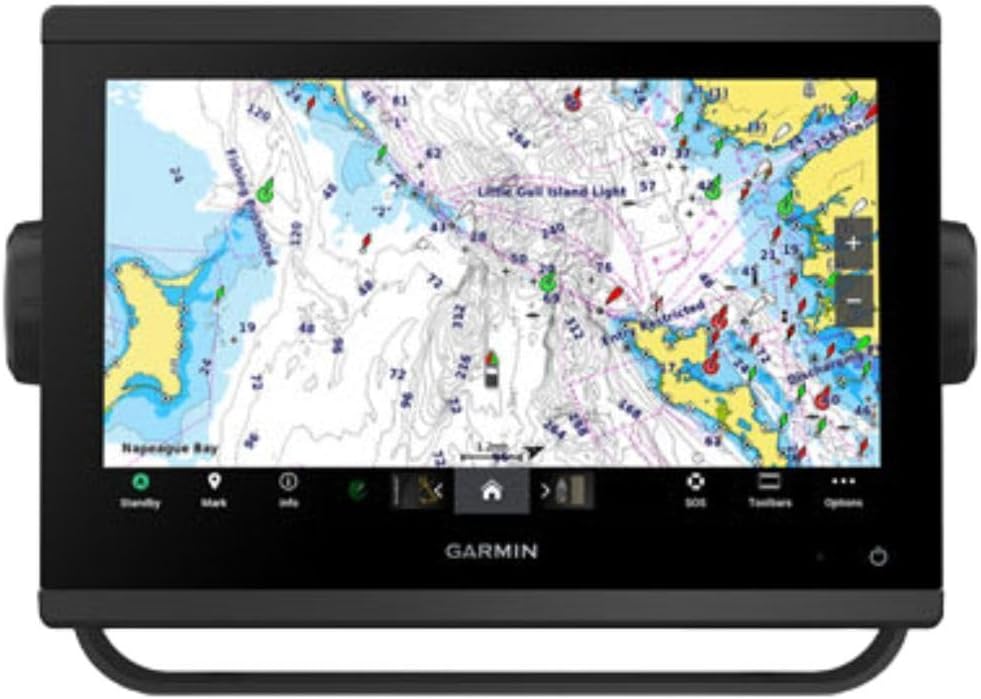
Long runs need dependable trolling tackle. Start with the blue-water trolling starter kit and add the wahoo wire-ready kit so a toothy fish doesn’t cut you off. See the wire leader roundup and offshore electronics for finding temperature breaks 40 miles out. A gaff, quality braid and real safety gear round out a Gulf Stream day.
Before You Go
Florida rules come from FWC, and snook have their own seasons: read the FWC snook page. Tunas, billfish, swordfish and sharks are federal Atlantic Highly Migratory Species with their own vessel permit: check NOAA Fisheries. Not legal advice.
Forty miles is a serious run. Do the fuel math both ways, file a float plan, and let the forecast make the call.