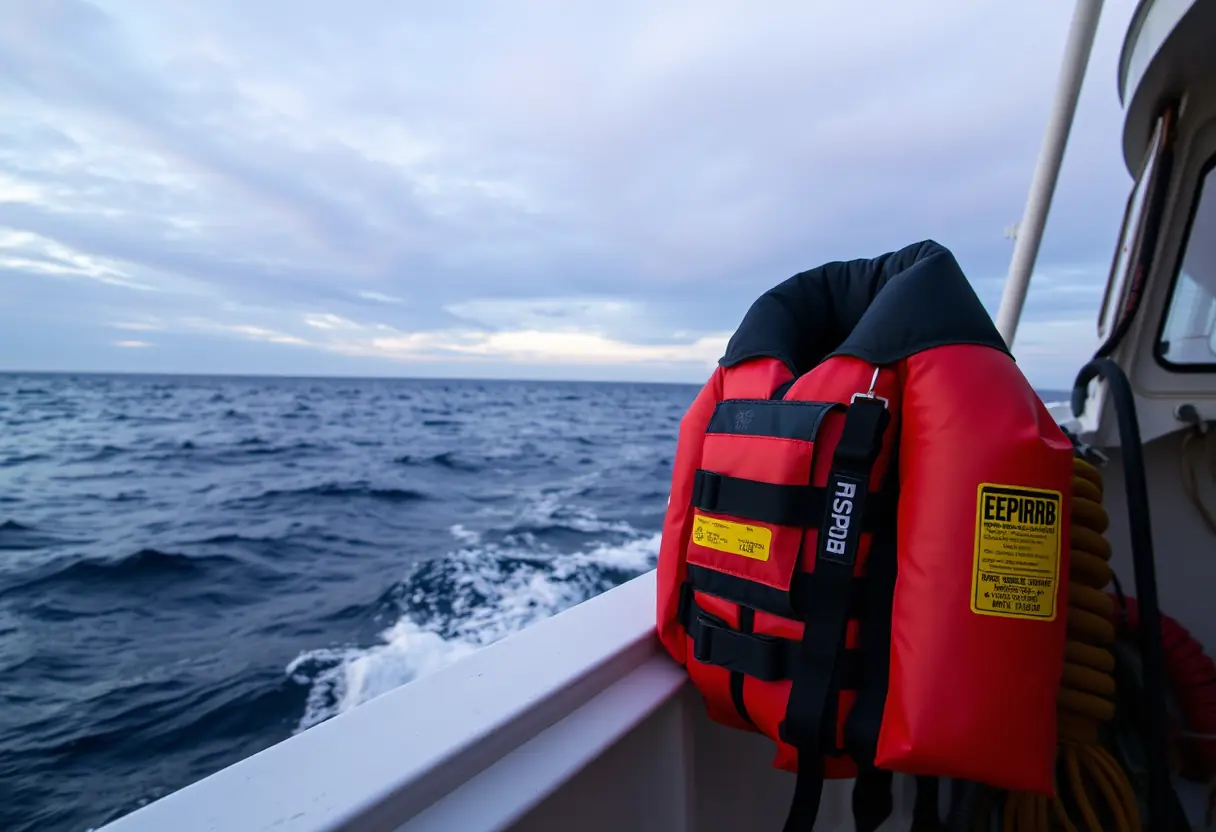
Running forty miles offshore before sunrise means you’re well past the range where a bad decision
gets fixed quickly. Safety gear on this list isn’t the exciting part of the kit. It’s the part
that makes every other trip on this site possible in the first place.
What We’re Looking For
A PFD you’ll actually wear. The best life jacket is the one that’s on you when something goes
wrong, not the one stowed under a seat because it got in the way of fighting a fish.
GPS-accurate distress signaling. VHF range doesn’t reach the beach from forty miles out. An
EPIRB with GPS gives rescue crews an exact position, not a search area.
Fight-specific gear. A harness isn’t just comfort. It changes how long you can stay engaged
with a heavy fish before your body gives out first.
As an Amazon Associate we earn from qualifying purchases through the links on this page. Full
affiliate disclosure.
Our Picks
An inflatable PFD low-profile enough to wear through a full day of
fighting fish without it getting in the way. A GPS EPIRB is the non-negotiable piece
of the kit for genuine offshore range: no subscription required, and it should outlast the boat.
Pair standup fishing with a fighting harness that puts the load on your
hips and legs instead of your arms.
None of this is optional gear dressed up as a recommendation. This is the kit that makes running
forty miles out before sunrise a calculated risk instead of a reckless one.
Frequently Asked Questions
How should I set up offshore safety gear for a fishing trip?
Wear the inflatable PFD, mount the GPS EPIRB where the crew can reach it, and rig the fighting harness to the rod belt before the first fish bites. Safety equipment stays accessible, not buried in a locker.
Which species and techniques suit this safety setup?
The setup supports offshore trolling, chunking, and standup fights for bluefin, yellowfin, wahoo, sailfish, and mahi. The PFD and EPIRB cover the run offshore; the harness keeps the angler engaged during heavy fights.
How do I maintain a PFD, EPIRB, and fighting harness?
Inspect the PFD cartridge and inflation chamber, test the EPIRB on its prescribed schedule, rinse hardware with fresh water, and dry the harness after every trip. Replace expired batteries and damaged straps before launch.
Is premium offshore safety gear worth it over budget equipment?
A compliant budget PFD works only when it fits and gets worn. Premium low-profile flotation, a GPS EPIRB, and a durable harness buy comfort, accurate distress location, and reliable load support far offshore.
Mustang Survival$265
Elite 120 Inflatable PFD
★ 4.9(19)on Amazon
Forty miles out, the PFD you actually wear is the one you forget is on you. Low profile, USCG Type III approved, does not get in the way of a fighting harness.
HOLDS UP
- Low-profile, stays on during the fight
- 28lb buoyancy, USCG Type III approved
- Simple re-arm process after deployment
WATCH FOR
- Needs a rearm kit after every deployment
Paid link · We may earn a commission from purchases.
ACR$745
GlobalFix V6 EPIRB (Cat II)
★ 4.9(48)on Amazon
Forty miles offshore before sunrise is not the place to find out your VHF range does not reach the beach. GPS + satellite distress signal, no subscription. This is the non-negotiable piece of the kit.
HOLDS UP
- GPS-accurate distress position
- No subscription required to function
- Long battery shelf life
WATCH FOR
- Upfront cost: buy it once, it should last years
Paid link · We may earn a commission from purchases.
Braid Products$250
Power Play Stand-Up Fighting Harness
★ 4.3(24)on Amazon
Puts the load on your hips and legs instead of your arms and back. The difference between landing a bluefin and tapping out at the twenty-minute mark.
HOLDS UP
- Transfers fight load off your arms
- Fits a 26-56in waist range
- Padded for a multi-hour fight
WATCH FOR
- Takes a trip or two to dial in the fit
Paid link · We may earn a commission from purchases.