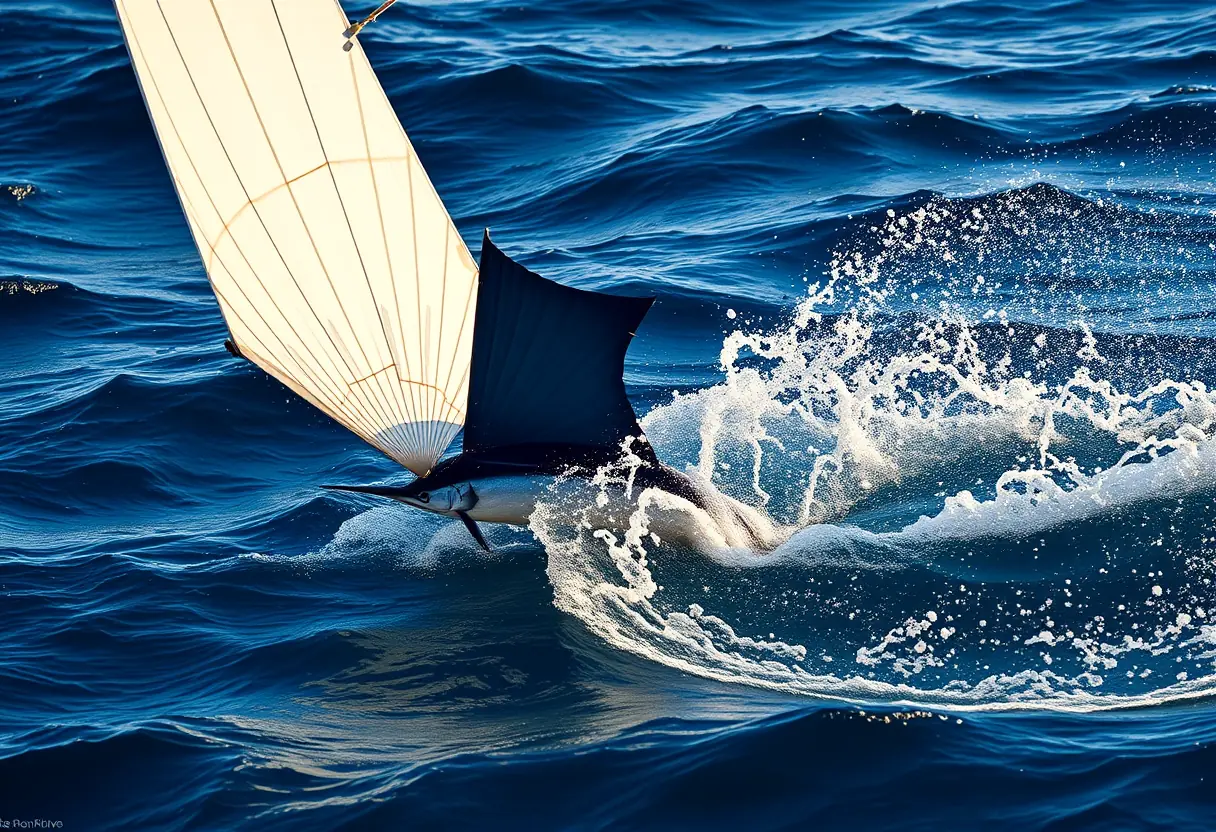
Sailfish hunt the surface, which is exactly why kite fishing was built around this species: a struggling bait on top of the water, in full view, draws strikes that a bait fished deep never sees. The presentation is visual and unforgiving. Set the kite at the right angle, keep the bait lively, and make sure the crew knows which line moves first when a sail comes into the spread.
The fight matches the strike: sailfish are among the most acrobatic fish in blue water, tail-walking and jumping repeatedly before finally settling into a deep, dogged fight near the boat.
Where and When
Current edges, temperature breaks, and areas with concentrated baitfish hold sailfish seasonally. They are often found in loose packs, moving with bait schools along the same edges that hold mahi and wahoo. In tropical water, sails can be available much of the year; in seasonal fisheries, the strongest run follows a temperature shift and the arrival of flying fish, sardines, or other surface bait. Read the water before committing the spread and use the kite rig breakdown to keep the presentation stable when wind and current disagree.
Tackle Class
Twenty- to 30-pound class with circle hooks is the working range. Non-circle hooks on sailfish lead to deep, often fatal hookups on a fish that is typically released. Light tackle makes the acrobatic fight worth the trip, but only when the drag is smooth and the leader is checked after each jump.
Size, fight, and the OffshoreHookup canon
Most sailfish run 30-60 pounds, with large females reaching 70-100 pounds. The fish can look larger than the scale suggests because the dorsal sail, bill, and repeated jumps occupy the entire spread. Sailfish belong in the OffshoreHookup canon because they are pure surface violence: one bait goes down, the sail comes up, and the crew has seconds to clear lines, feed the circle hook, and release a fish that may jump beside the boat. The sailfish and mahi kite guide is the playbook for that exact moment.
The hookup plan
Let the circle hook find the corner rather than swinging hard at the strike. Keep the line clear of the kite and other baits, follow the fish during its first run, and use the boat to keep the angle clean through the jumps. Photograph the fish in the water when possible, cut the leader close if it is deep, and release it with the same urgency used to build the spread.

