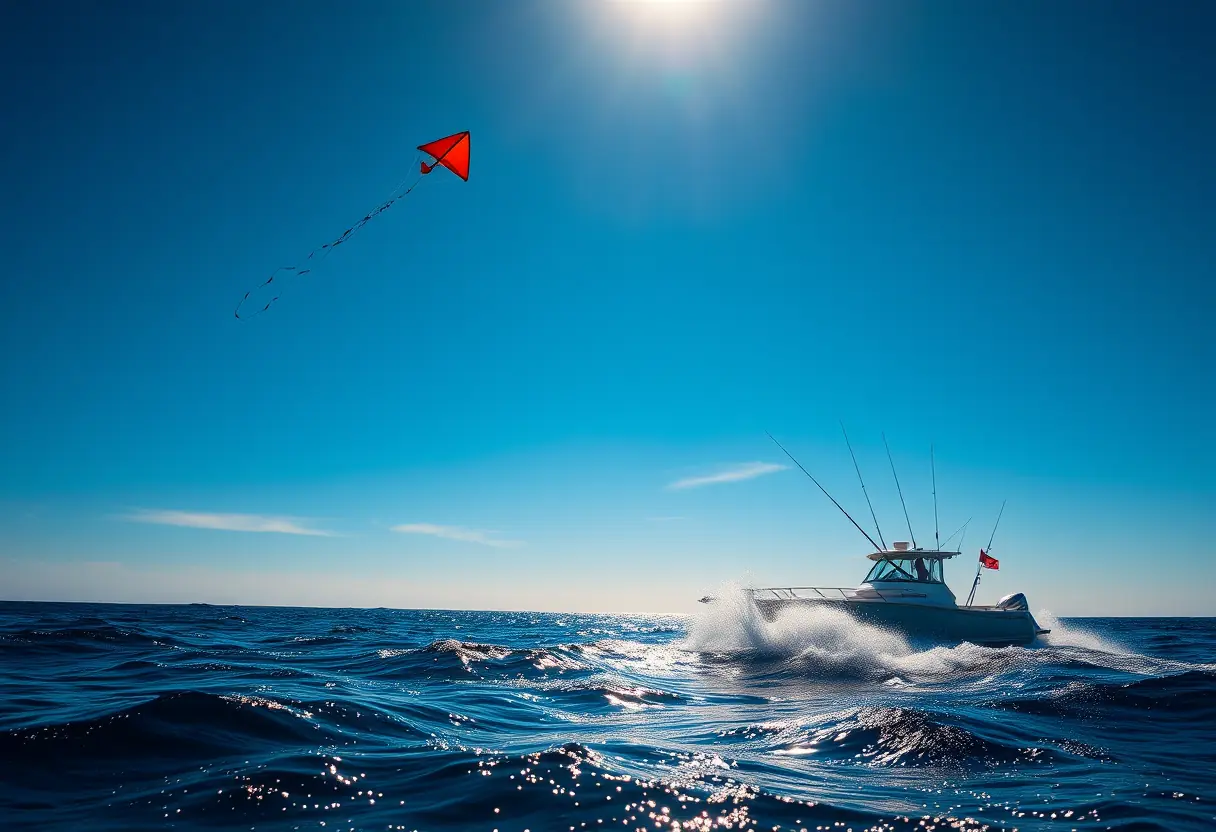
Sailfish hunt the surface. Kite fishing puts your bait exactly there: skipping and struggling on top of the water, in full view, with none of the line visible to spook a fish that’s already looking up.
It’s the technique that turns a slow current day into a bite, because it doesn’t depend on drift speed or trolling speed to present the bait. The kite does the presentation work, and the boat just has to hold position.
The Setup
Fly the kite off a dedicated kite rod and reel, letting out 100-300 feet of kite line depending on conditions. Clip a fishing line to the kite line via a release clip, positioned so the bait (a live goggle-eye, threadfin, or blue runner) struggles on the surface 30-80 feet behind the boat. A second clip further down the kite line runs a second bait, doubling your spread without adding a second kite.
The kite-fishing kit gets you the whole system in one purchase: kite, line, and release-clip hardware sized for real offshore wind. The clips themselves are worth buying separately as spares; they’re the part most likely to fail mid-fight.
Tension Is Everything
The release clip tension is the single hardest thing to get right, and it’s the difference between a hookup and a missed shot. Too tight, and the fish feels resistance on the strike and drops the bait before you can react. Too loose, and the clip releases on wave action alone, dropping your bait into the water dead: no action, no strike.
Dial it in on the water, not at the dock. Set it slightly tighter than you think you need, then back off in small increments until a moderate tug on the line releases clean.
The Strike
When a sailfish or mahi eats the bait off the surface, the line pops free of the clip and the rod loads up, but resist the urge to set the hook immediately. Circle hooks and free-swimming baits need a few seconds of the fish actually taking line before you engage the reel and let the hook find the corner of the jaw on its own.
What Kills This Rig
Flying the kite in dead air. Under 8 knots of wind, most kites sag and drag baits under the surface, and you lose the entire point of the technique.
Ignoring clip maintenance. Salt corrosion changes release tension over a season. Rinse and check clips after every trip.
Setting the hook too early. The number one way to miss a sailfish on kite gear: let the fish commit before you engage.

