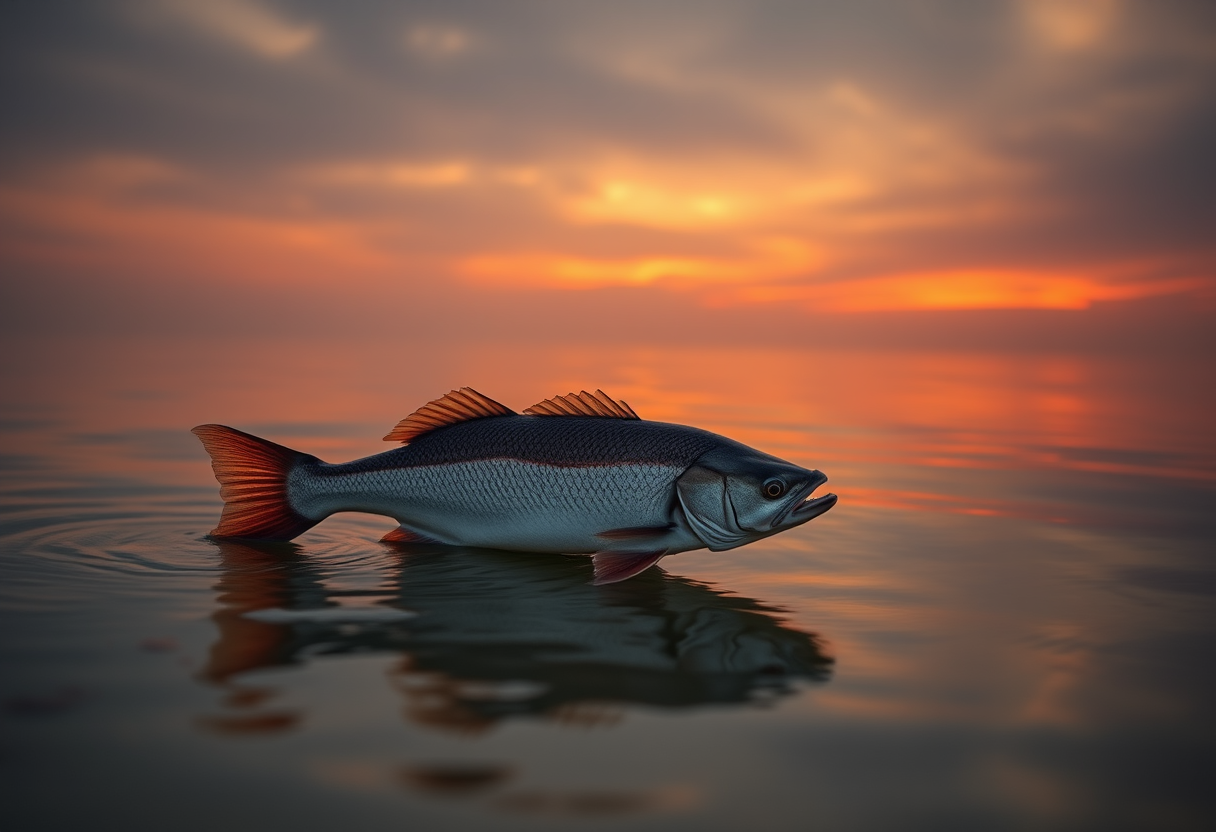
A tailing redfish is the closest saltwater fishing gets to hunting. You see the fish before you cast. You pick the angle, control the approach, and place the lure. When it works, it looks like it was inevitable. When it doesn’t, it’s always something you did.
That’s the discipline that makes this the most sought-after inshore experience in the Gulf and Atlantic. Not the fish’s size: a slot red is not a giant. It’s the game.
Reading the Flat
Tailing happens when redfish root on the bottom in shallow water, head down, feeding. The tail breaks the surface because the fish is too big for the depth it’s hunting in. That’s your signal.
The right flat has incoming tide, sun angle, and baitfish. Grass flats with a hard-sand or oyster bottom transition hold feeding reds because that’s where crabs and shrimp concentrate. A flat that never holds bait never holds redfish.
Scan for three things: tails and fins breaking the surface, nervous water (V-wakes moving without wind), and mud puffs where a fish just dug. A mud puff means the fish was there 30 seconds ago; track its direction and cut it off. Fins and tails are the obvious read. Nervous water requires practice and polarized lenses that actually cut surface glare.
Costa 580G glass cuts glare in a way polycarbonate cannot. This is not marketing: the ability to see a fin at 80 feet before the fish sees your boat decides whether you get a shot at all.
The Approach
You get one approach per fish. Redfish in shallow water are not oblivious, but they are head-down and feeding, which buys you time if you don’t waste it.
Speed kills the shot. Whether you’re on a flats boat with an electric trolling motor, wading, or paddling a kayak, close the distance slowly. On a poled boat, the push pole angle matters: a pole slapping the hull or scraping oyster rock 60 feet away is enough to flush a fish that never saw the boat. Wade-fishing anglers have a stealth advantage in that they produce less visual profile and boat noise, but water displacement from a fast wade gives the same result as a fast approach under power.
Target angle: position yourself to cast across the fish’s direction of travel, not directly at it. An approaching cast requires the fish to turn toward you. A cross-angle cast intercepts the fish’s path with the lure already in position.
Cast Placement
Three to five feet ahead of the fish’s nose, on an intercept path with the direction it’s moving. Let the lure sink before the fish reaches it. A lure that hits the water as the fish arrives is the right timing. A lure that’s already sitting on the bottom and waiting is slightly better.
A cast that lands on the fish is not an aggressive cast. It’s a spooked fish.
Redfish will track a moving lure, but they commit faster when they find it already in the strike zone. Work the lure slowly once the fish is within range: a slow retrieve or a single short hop is enough. The fish already knows where the lure is.
The Rig
Two setups cover almost all sight-casting scenarios.
Gold weedless spoon. A 1/4 to 1/2 oz gold spoon with a single weedless hook is the standard flat-water sight-casting lure. It casts accurately, lands light, and the flash reads at distance in the fish’s lateral line before it ever processes it visually. Hook it through the nose loop, not the tail, so it runs level and doesn’t spin. Attach it directly to a short fluorocarbon leader in the 20-30lb range.
Soft plastic on a light jig. For fish that refuse the spoon or are sitting tight on the bottom, a 3-4 inch shrimp or paddle-tail on a 1/8 oz weedless jig head gets a slower fall rate that gives a redfish more time to rise and eat it. Same fluoro leader, same presentation: intercept ahead, slow retrieve, let the fish commit.
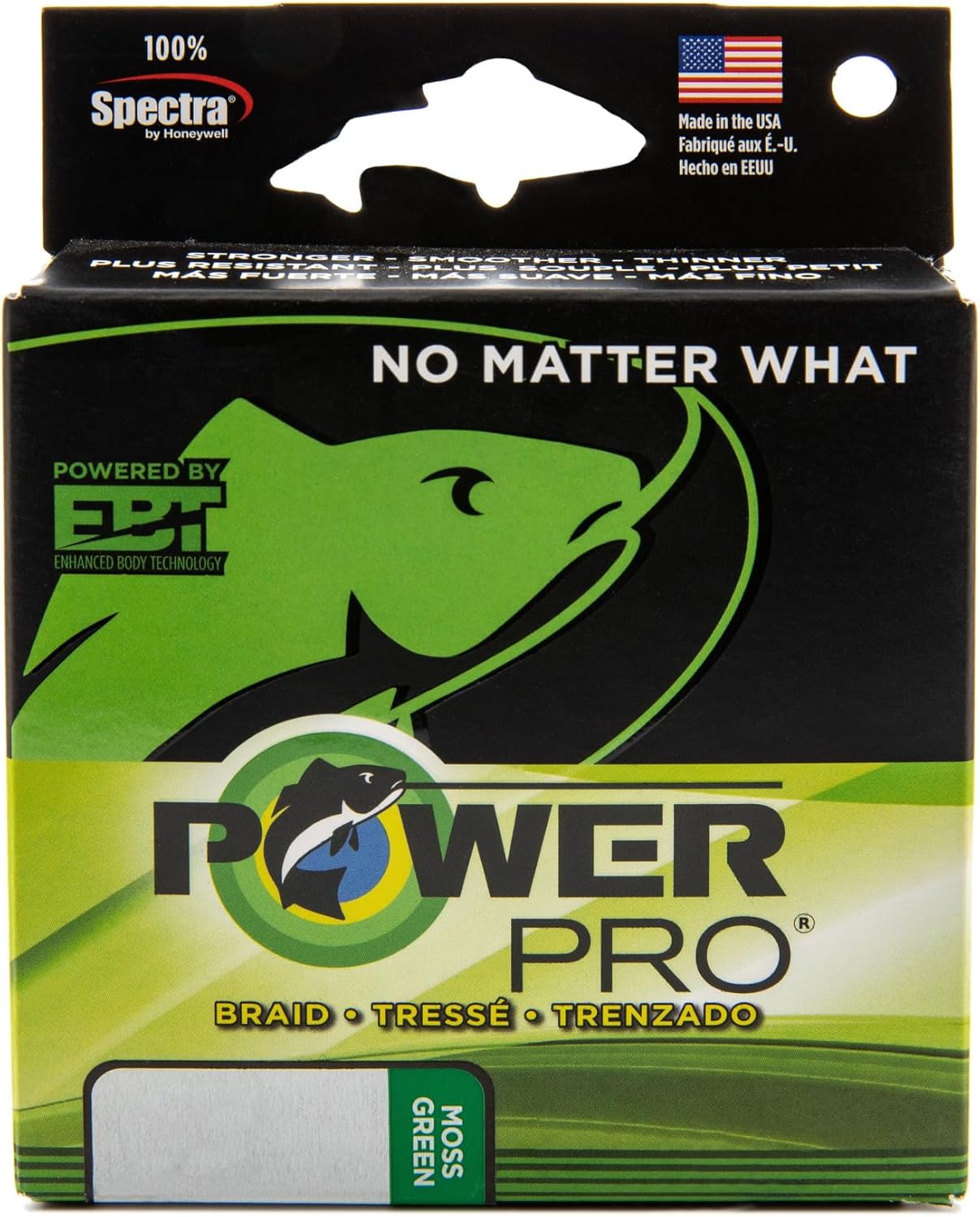
Main line: 10-20lb braid to the fluoro leader. The Power Pro catalog lists 80lb offshore spec, but the same construction is available in the 10-20lb class, and the no-stretch sensitivity that works for chunk-baiting tuna offshore works equally well for detecting a subtle flat-water take. Zero stretch braid means you feel the hit before you see it.
The leader-to-main connection should be a small, clean loop-to-loop or an Albright: any knot bulk at the connection clumps grass on every retrieve on a vegetated flat, which is every flat worth fishing.
The Hookset and Fight
Set hard on a circle hook and you miss it. Set hard on a J-hook and you miss it too, but for the opposite reason. If you’re running a soft plastic on a light jig with a standard hook, a firm pull-set is correct: sharp, side-loaded, not a jaw-hinge strip-set.
On a circle hook (correct for live shrimp presentations), no set at all: reel down and let the hook find the corner of the mouth.
A hooked slot red is not a blue marlin. It runs hard in one direction, burns drag for 30-50 yards, and then sulks. The fight is mostly about keeping it out of oyster bars and grass edges where it will cut the leader. Keep pressure on and the fish comes to the net quickly.
Fishing pliers for hook removal, wet hands or a lip grip for the hold. Slot redfish released quickly from shallow water are almost universally fine. Hold them headfirst into any current for 30 seconds before letting them swim. A fish that’s not kicking is not ready.
What Kills This Rig
Casting on top of the fish. This ends more sight-casting shots than any other mistake. Cast ahead and intercept, not at.
Slow polarized lenses. Cheap polycarbonate glasses do not cut glare in the same water where quality glass lenses show fish clearly. You cannot cast at fish you cannot see.
Approaching from directly downwind. Redfish in shallow water feel pressure waves and boat sounds, not just see movement. The approach angle determines whether the fish is feeding when you arrive or already 100 yards away. Downwind means noise carries directly to the fish. Work the boat or wade path to approach from an angle.
Moving too fast after a flush. A spooked fish that blows out of a pocket does not always leave the flat entirely. Slow down, wait three minutes, and scan. Redfish return to feed; other anglers who pushed off to find a new fish leave that one for you.
The fish don’t negotiate. Land the lure in the window or move on to the next one.
More inshore: tailing reds in a blow when the flats shut down, redfish species breakdown, and night tarpon on structure if you’re working the same inshore territory after dark.