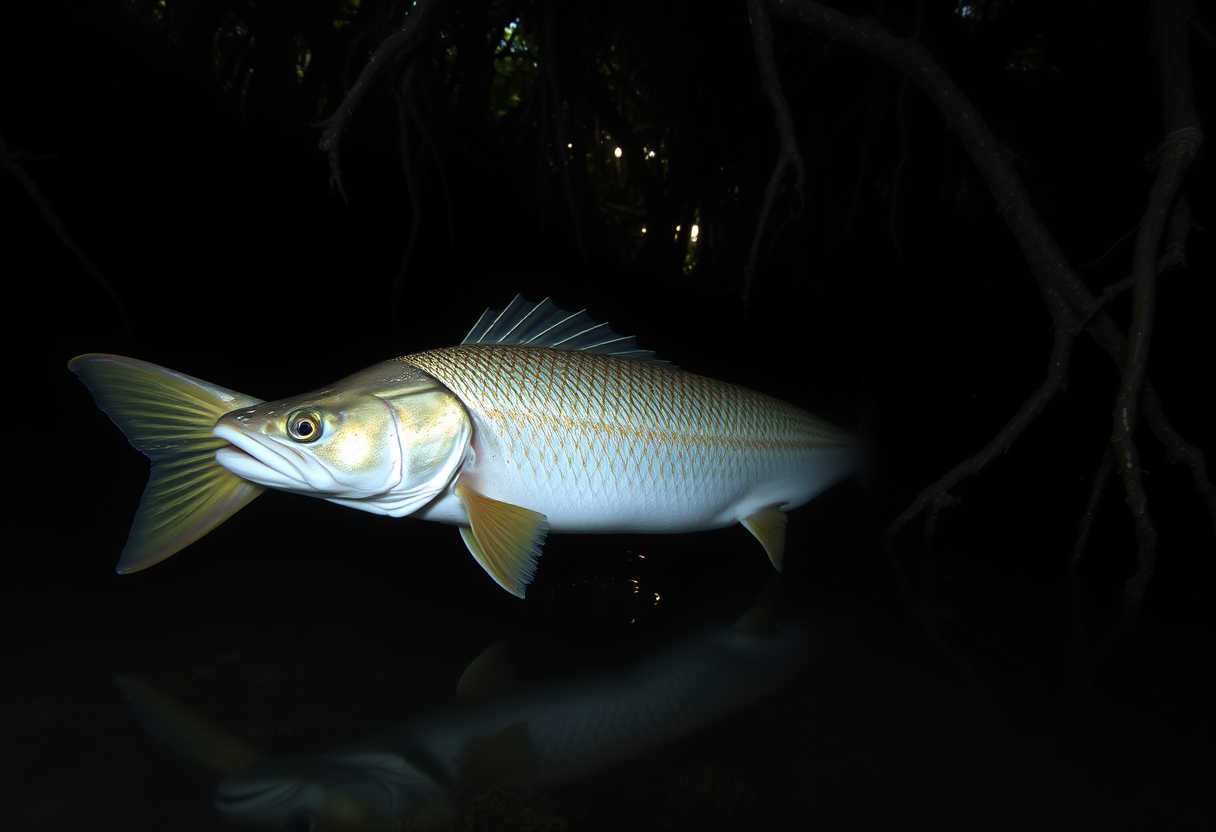
Snook live on structure—mangrove roots, dock pilings, bridge shadows, seawalls—and they use every inch of it to break you off the moment they are hooked. This is a fish that punishes soft drag and light leader in equal measure. Make the cast tight to the ambush point, keep the presentation moving through the current seam, and decide your first three seconds before the bite happens.
The bite itself is often subtle compared to the fight that follows. A snook will inhale a bait close to structure and immediately bury back into cover, which means hook-set and initial drag pressure both need to happen fast, before the fish gets its head turned.
Where and When
Mangrove shorelines, dock pilings, passes, inlets, and surf troughs hold snook consistently. The bite concentrates around tidal current because moving water pulls bait past ambush points and triggers feeding activity. Seasonal migrations and warm-water periods can stack fish along passes, while resident snook stay on reliable dock and mangrove structure. Fish the moving water first; the prettiest shoreline is worthless when the tide is slack.
Tackle Class
Fifteen- to 20-pound braid to a fluorocarbon leader in the 30-40lb range handles open water and moderate cover. Go heavier, not lighter, any time you are fishing tight to mangroves or pilings. The snook structure-and-surf guide lays out the angle and bait choices, while saltwater braid gives the thin diameter and capacity needed for a hard first run. A strong knot and a checked leader are mandatory; snook do not need a long fight to win.
Size, fight, and the OffshoreHookup canon
Many inshore snook weigh 5-15 pounds, with 20-30-pound fish qualifying as serious trophies. Large females can exceed 40 pounds in the right fishery. Snook belong in the OffshoreHookup canon because they compress a whole offshore mindset into a few yards of water: preparation, accuracy, current reading, and immediate pressure. There is no room for a soft drag or a lazy first move when the fish has a root ball, piling, or seawall within reach.
The hookup plan
Aim the cast so the bait enters the strike zone with the tide, not across it. Keep the rod low and the line tight enough to turn the fish immediately, then move the boat when the shoreline demands a new angle. Once the snook is clear of cover, reduce unnecessary pressure and use a net or wet hands for a quick release. The best structure fight is the one that ends before the fish is exhausted.