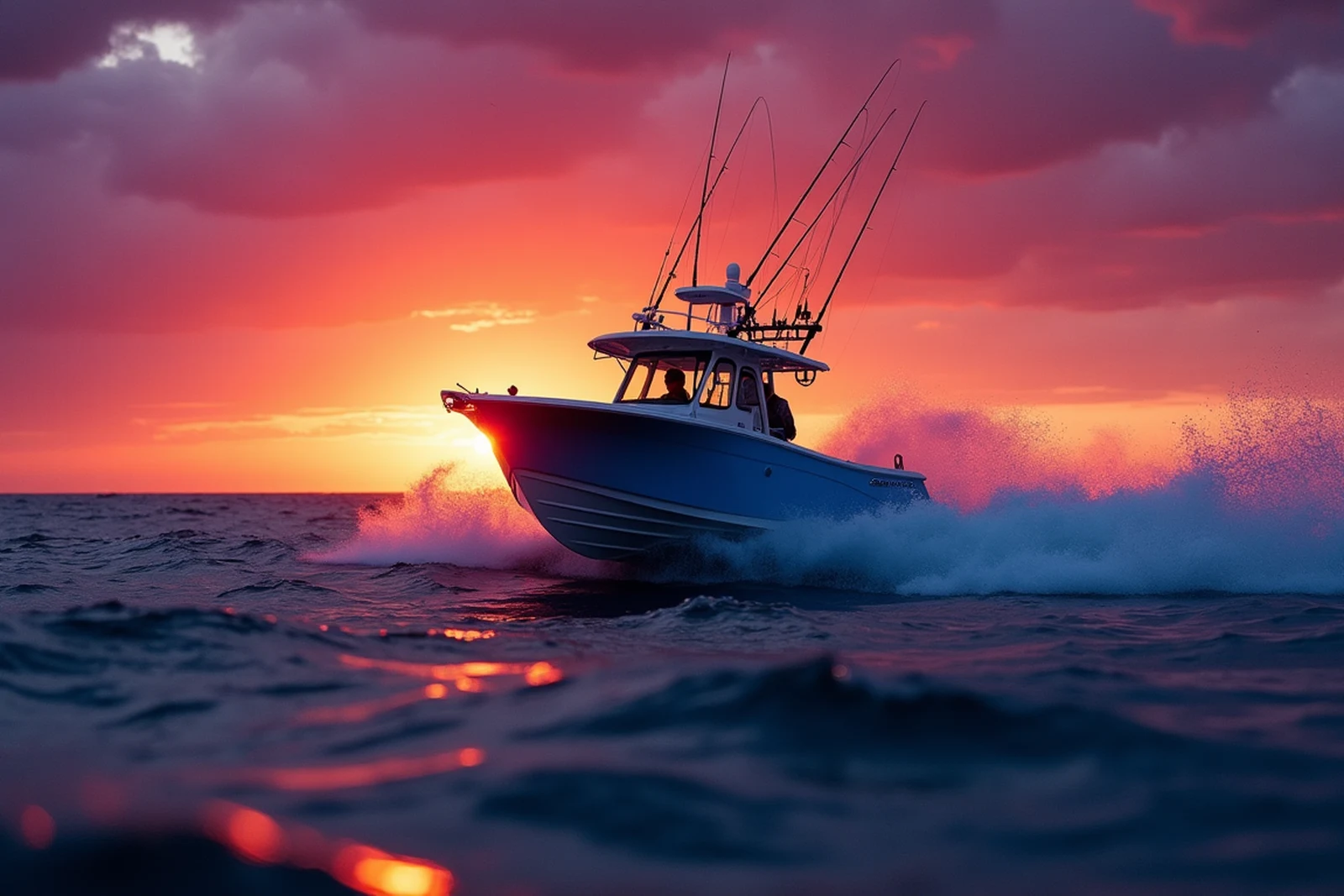
There is no chair on this boat. Your hips are the chair.
A chairless fight is a system. Harness, rod and reel carry one load between them, and the weak link is the first thing to quit. Get the three set up as one unit and a hard fish becomes work you can sustain. Get one wrong and your arms and lower back pay for it.
This guide covers the setup and the staging. It does not promise a fish at the boat. Nothing does. For the full chairless tuna technique, read the bump-and-wind guide alongside this one.
The system: three parts, one load
The fish pulls on the line. The line pulls on the reel. The reel pulls on the rod. The rod pulls on you. Every link has to hold, and the last link is the one you can feel.
The harness is the last link. The Braid Products Power Play Stand-Up Fighting Harness transfers load toward your hips and legs. Its listed fit range is 26 to 56 inches, and the padding suits a long fight. The tradeoff is setup time: fit and test it under controlled load before a fish makes you find the loose strap.
The rod is the lever. The Fiblink 50-80lb Standup Trolling Rod has roller guides that cut friction under load, and standup length for boats with no chair. It handles 50 to 80lb mono or braid. It is built for one job. This is not a finesse rod, and it is the wrong tool for light spinning work.
The reel is the gearbox. A two-speed lever drag gives you low gear for leverage on a heavy fish and high gear for taking line when the fish gives it. The Shimano Tiagra 50A Two-Speed Lever Drag suits a planned kite or mixed offshore spread. Its line capacity trails the top Penn models on the biggest sizes, so check the published capacity against your backing and topshot. The Penn International VI Two-Speed Lever Drag has a full metal body and the Dura-Drag system, and it is heavy on a full day of hand-holding with a premium price. Check the selected model and its line-capacity chart before you build a bluefin rig around it.
Pick a reel only after checking the exact model’s capacity, line class, harness-lug compatibility and fit with the rod. The pairing matters more than the badge. A 50 to 80lb rod is not a blanket prescription for every bluefin; size the complete rig for the fish and conditions you expect.
Where the load goes on your body
Picture a bluefin on the other end. The rod butt seats in a compatible fighting belt, the harness connects to the reel’s harness lugs where fitted, and your legs carry the load. A harness alone does not provide a rod-butt socket. Check how these pieces fit together before the bait goes out.
Connect and adjust the harness before the strike. Set your feet apart, knees soft and rod butt seated in the belt. Keep your center of balance inside the rail. Have a crew member nearby when you are connected to a loaded fish.
Your arms steer. Your legs hold. If the harness rides up, the butt slips or your stance becomes unstable, ease the load with the crew’s help and reset the fit. Do not try to fix a slipping belt while the rod is pulling you toward the rail.
Check the rest too. A connection to a loaded reel on a moving boat can trap an angler. Learn how your particular harness disconnects before the trip, and keep the deck clear of rope and bait boxes. Tell the captain and crew you are connected before the fish makes its first run.
Staging drag and gear
Drag is not a number you memorize. It is a decision you stage.
Set and check strike drag before the bait goes out, based on the rod, line, reel and connections in your rig. Follow the reel maker’s setup instructions. Check drag with the line coming off the rod at a realistic angle and keep the rod’s limits in view. There is no universal setting for every tuna setup.
During a run, keep the crew clear of the line. If the fight calls for a drag change, call it out and move the lever deliberately while watching the line angle and the fish. Do not drive the lever beyond a preset strike position just because the fish has stopped moving.
Low gear gives more cranking power when the fish is heavy and far down. High gear recovers line faster when pressure eases. Follow the reel maker’s shifting instructions and avoid forcing a shift during a hard run. Know which gear you are in before you start the next lift.
Mark the planned strike position during setup and check it before each bait goes out. The crew should know the setting and who will call any change.
Pumping the rod
Pumping is the engine of a chairless fight. It is slow, repetitive and effective.
Lift smoothly with your legs while keeping the rod inside its working angle. As you lower the tip, wind to recover the line you gained. If the reel will not turn under load, use low gear; do not force the handle or raise the tip into a high-stick angle.
Short, controlled lifts beat big heaves. A smooth rhythm saves your back and keeps pressure steady, which matters when you cannot see what the fish is doing. If the fish surges and the rod bows hard, stop pumping and hold. Let the drag work. Pick up again when the line quiets.
Breathe. Count your cadence if it helps. A steady lift and retrieve keeps you ready for the next run.
When the fish is deep and not moving
This is the fight that breaks people. The rod is bowed, the line is tight, the fish is sitting on the bottom of the water column, and nothing is coming.
A tuna that has gone deep and stopped can keep the line nearly vertical. More drag alone can overload the rod or line. Check the line angle and the rhythm before changing the lever.
Keep steady pressure and use low gear when the handle is hard to turn. Pump in short, deliberate lifts and take line as you lower the tip. If the line stays vertical, ask the captain to reposition the boat to change the angle, while keeping the line clear of the hull and propeller.
Reset your stance if the deck and line angle allow it. Check that the harness has not crept up. If another angler takes over, the crew should control the rod and line while the first angler disconnects; rehearse that transfer before a fish is on.
Do not crank the drag in desperation. A cooked drag or a parted line ends the fight faster than a stubborn fish does. Stay patient, stay staged, and keep the pressure honest. The fish does not negotiate, and it does not give in on your schedule.
When the fish does start to rise, move to high gear only once you are gaining steady line. The boatside work, gaffs, gloves and crew handling, is covered in Boatside Handling: Gaffs, Gloves and Big Pelagics.
What goes wrong
An ill-fitted harness. It rides up, pinches or shifts under load. Dial the fit on a few easy trips before it matters.
A mismatched rod and reel. Roller guides and a 50-80lb rod only do their job with a reel and line in the same class. Check the reel’s line capacity against what you spool.
Unplanned drag changes. Mark and check the planned strike position before every bait goes out. Call out any change during the fight.
Heat and wear. A long fight is hard on a drag that was not serviced. Do the maintenance before the season, not after a fish shows you the problem.
Standing tall. Locked knees and a rigid back turn a hip-and-leg fight into an arm-and-back fight. Stay low and bent.
Target species matter. Bluefin tuna can run heavy and deep. Yellowfin tuna hit hard and circle under the boat. Build the setup around the fish you expect, check the state fish and wildlife agency for the rules where you fish, and never count a fish until it is in the boat.


