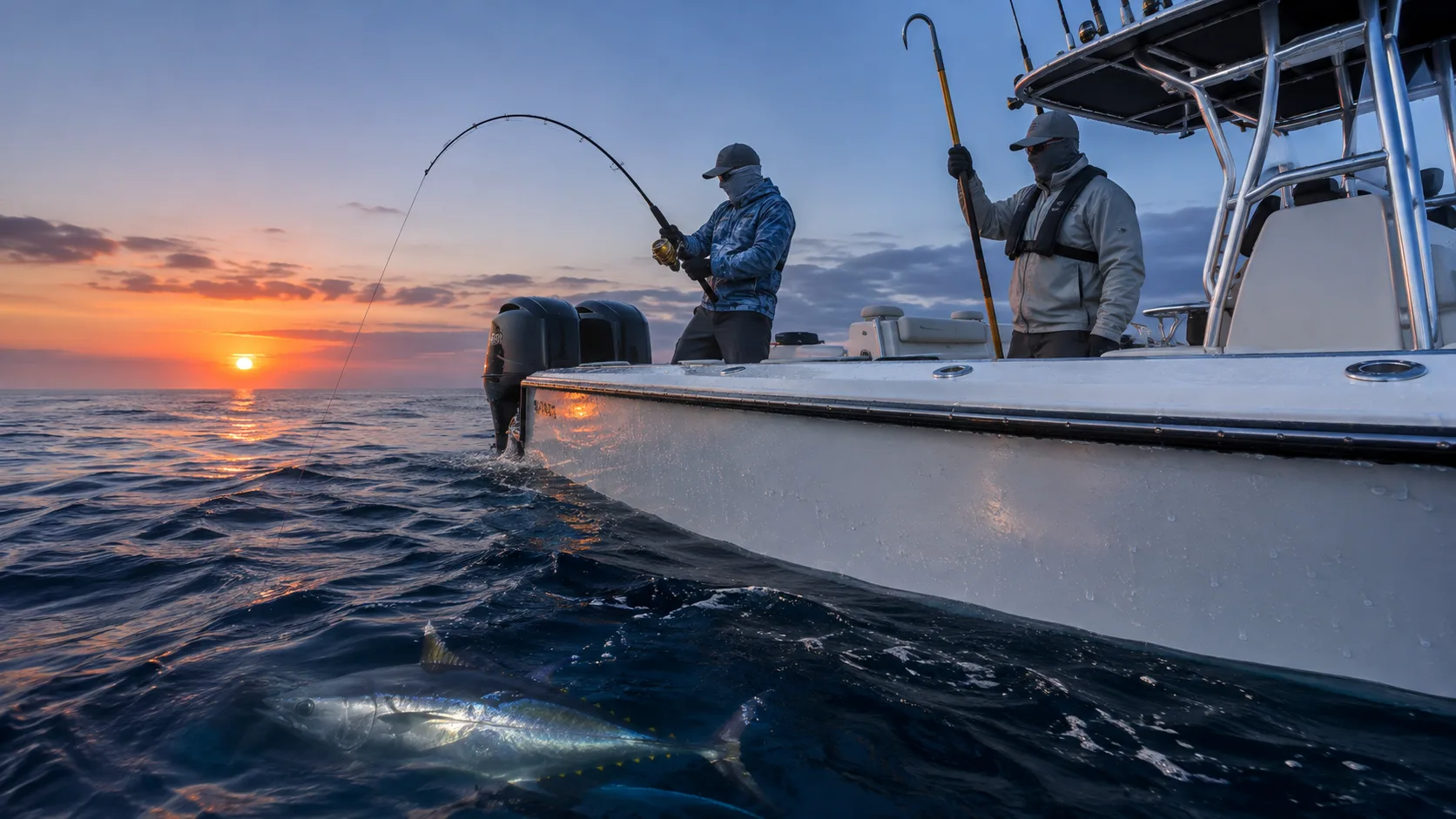
The fish is at color. The rod is loaded. A silver flank flashes under the transom, and every person in the cockpit wants to move at once. Stop the scramble. The last stretch of a canyon bluefin fight needs a caller, a clear rail, and a decision about release or retention before anyone lifts a gaff.
This is a crew procedure for yellowfin, wahoo, and manageable bluefin. A giant bluefin demands experienced crew, suitable heavy landing equipment, and a plan beyond the compact tools below. The fish does not get to set the pace on deck.
Make the retention call before the leader arrives
Know the species, the permit, and the current rules before the first bite. For Atlantic tunas, check NOAA Fisheries’ HMS permit guidance and the current bluefin fishery status. Check the state fish and wildlife agency too. Retention can depend on the fish, place, permit, and date. If the crew cannot confirm a fish may be kept, keep the gaff stowed and prepare to release it in the water.
NOAA’s catch and release guidance says never gaff a fish intended for release. Keep handling brief and use suitable release tools while the fish remains in the water. Decide who will handle the leader and who will cut or remove the hook. Do not drag a release fish aboard for a photo.
The same rule applies when a fish cannot be identified clearly at color. A flash of blue bars suggests wahoo, but the crew needs a positive identification before taking a retention shot. Hold the decision until the fish is visible and the rules are clear.
Give the cockpit one voice
Before the fish comes up, the captain assigns a caller. That person directs the angler, leader handler, and gaffer. On a small crew, the leader handler can call the final approach. Everyone else listens. The captain maintains boat control and keeps the propeller and hull from turning the leader into a hazard.
Clear loose rods and trip hazards from the working side. Put the gaff in a secure position with its point controlled. The angler keeps pressure on the fish without driving it into the transom. The leader handler watches its head, line angle, and the next turn. The gaffer waits inside the rail with a stable stance. Nobody reaches across another person’s line or stands in a loaded leader’s path.
When a yellowfin circles beneath the boat, call the direction of each pass. Move feet before hands. A fish that dives again gets room to run; the angler regains line and the crew resets. A rushed gaff swing at a green fish can leave a hook flying through the cockpit. If the deck or crew cannot support a controlled landing, stop the attempt and reset the plan.
Leader control is a job, not a grip contest
The leader handler brings the fish within reach under the caller’s direction. Keep hands away from the mouth, hooks, and gaff point. Never wind leader around fingers, palms, wrists, or a cleat. If the fish surges, let the leader move rather than trying to hold a loaded fish with bare force.
Wet-grip gloves can make routine line and deck work easier. They are no guarantee against a loaded leader, a hook, or wahoo teeth.
The Fish Monkey Pro 365 Guide Gloves have a grippy palm and quick-dry material according to the product registry; their snug fit is a real sizing tradeoff. Use them for handling tasks that call for grip, and keep your hands clear of the dangerous parts of the fish.
For a wahoo on wire, keep the head and teeth away from the crew. The wire is there to survive the bite, not to become a handhold. The wire leader guide covers the rig before the strike. At boatside, the caller controls when anyone approaches the head. If the fish is for release, use a suitable tool from a safe position and leave it in the water.
Call the gaff only for a fish you can keep
Once the fish is identified, legal to retain, and stable beside the boat, the caller can direct the gaffer. The gaffer plants their feet inside the rail and keeps the point away from the crew until the shot. No blind jab under the hull. No reach from a boat that is still making way. The leader handler clears space and the angler maintains control while the gaffer acts on the call.
The BUBBA Fixed Gaff, 7ft, Carbon Fiber Shaft has no telescoping joint and offers reach on a deck with room to stow it. The tradeoff is its long storage footprint. For a smaller boat and manageable fish, the SANLIKE Telescopic Fishing Gaff, Stainless Hook collapses for storage. Its moving joint needs a check before each trip and a rinse afterward. These are the gaffs in the boatside tools guide, which explicitly treats giant tuna as a different equipment class.
Do not choose a gaff by shaft length alone. Match the hook and entire landing setup to the fish, the boat, and the crew. An oversized fish beside a compact center console is a crew and vessel decision, not a challenge for a small retail gaff. If there is no safe landing plan, do not improvise with the tools on this page.
Finish the deck work without another hook injury
The fish is aboard only when the caller says the crew has control. Keep its head, tail, hook, and gaff point accounted for. A wahoo can still twist hard on deck. Clear the active hook with a tool and keep hands out of its path. The Piscifun Saltwater Pliers with Braid Cutter are a compact option for ordinary hook and line work, with a sheath for storage. Their registry notes that they do not replace dedicated crimping pliers for heavy wire rigs.
After the fish is secure, stow the gaff point before anyone resumes fishing. Rinse salt from the hook, shaft, and telescoping joint after the trip, then inspect the handle and connection before the next run. A stiff joint or loose connection is a reason to take the tool out of service.
The cleanest boatside sequence starts long before the fish reaches the wash: rules checked, roles assigned, gear inspected, and a release plan ready. At color, the crew can move with purpose instead of reaching into a tangle.


